Living Room Wood Ceiling Ideas That Transform Your Space
A living room wood ceiling can completely transform your space by adding warmth, texture, and a timeless appeal. Whether you prefer rustic beams, sleek plank designs, or modern coffered patterns, there is a wood ceiling style for every home. This guide covers the best ideas, installation steps, costs, and maintenance tips to help you make the right choice.
A living room wood ceiling has the power to turn an ordinary room into something truly special. It brings a sense of nature indoors and adds a rich, organic feel that guests notice the moment they walk in. If you have been thinking about updating your ceiling, wood is one of the most rewarding choices you can make.
Wood ceilings come in many forms. You might picture rustic exposed beams in a mountain cabin or clean-lined wooden planks in a modern apartment. Both styles work beautifully, and the options do not stop there. Whether your home has a cozy farmhouse vibe or a sleek contemporary feel, a wood ceiling can tie the whole room together.
In this guide, we will walk you through the best wood ceiling living room ideas, explain how installation works, share cost estimates, and give you practical tips for keeping your ceiling looking great for years. Let us dive in.
Key Takeaways
- Wood ceilings add warmth and character: A living room wood ceiling instantly creates a cozy, inviting atmosphere that other materials cannot match.
- Multiple styles to choose from: From rustic beams to modern planks, there are many ceiling design options for every taste and budget.
- Installation varies by complexity: Simple plank ceilings are DIY-friendly, while coffered or beam ceilings may need professional help.
- Costs range widely: Budget between $1,500 and $8,000 depending on the wood type, design, and whether you hire a pro.
- Maintenance keeps it beautiful: Regular dusting, occasional sealing, and proper humidity control will preserve your wood ceiling for decades.
- Pair with the right decor: Complement your wood ceiling with accent pieces for living room that enhance the natural beauty of the wood.
📑 Table of Contents
- Why a Wood Ceiling Transforms Your Living Room
- Top Living Room Wood Ceiling Ideas to Inspire You
- How to Install a Wood Ceiling in Your Living Room
- Living Room Wood Ceiling Cost and Budget Tips
- Caring for Your Wood Ceiling
- Pairs Well With These Living Room Styles
- Common Mistakes to Avoid
- Final Thoughts on Living Room Wood Ceiling Ideas
Why a Wood Ceiling Transforms Your Living Room
People often focus on walls, floors, and furniture when redesigning a room. But the ceiling is the fifth wall, and it sets the tone for the entire space. A wood ceiling brings several benefits that other materials simply cannot match.
First, wood adds warmth. It softens hard edges and makes a room feel welcoming. Second, wood ceilings are incredibly durable. With proper care, a quality wood ceiling can last for decades without losing its charm. Third, wood offers natural texture and grain patterns that give your room visual depth and interest.
A wood ceiling also increases the perceived value of your home. Buyers love the character and craftsmanship of exposed beams or elegant plank ceilings. It is one of those features that makes a living room feel premium without requiring a full renovation.
Types of Wood Ceilings for Living Rooms
Not all wood ceilings look the same. Here are the most popular styles you can consider for your space:
- Exposed Beam Ceilings: These feature thick, visible timber beams that create a rustic, cabin-like feel. They work best in larger rooms with high ceilings.
- Wood Plank Ceilings: Flat wooden planks are installed directly on the ceiling for a clean, modern look. This style suits contemporary and minimalist spaces.
- Coffered Ceilings: These use recessed panels framed by wood to create a three-dimensional effect. They add elegance and are perfect for formal living rooms.
- Tongue and Groove Ceilings: Interlocking planks create a seamless, textured surface. This is a versatile option that works in both traditional and modern settings.
- Slatted Ceilings: Horizontal or vertical wooden slats create a unique geometric pattern. They add a modern touch while still feeling warm and natural.
Top Living Room Wood Ceiling Ideas to Inspire You
Looking for inspiration? Here are some of the best wood ceiling living room ideas that can elevate your space.
Rustic Reclaimed Wood Ceiling
Reclaimed wood brings history and character into your room. Each plank has unique marks, knots, and color variations that tell a story. A reclaimed wood ceiling works beautifully in farmhouse, rustic, and bohemian living rooms. Pair it with warm lighting and natural fiber furniture for a cohesive look.
If you love the idea of a rustic ceiling but want a cleaner appearance, you can use reclaimed wood planks with a light sand and seal finish. This keeps the charm while removing rough edges and splinters.
Modern Light Wood Plank Ceiling
For a lighter, more airy feel, consider a light wood plank ceiling. Woods like pine, birch, or maple in a pale finish make a room feel open and bright. This approach is perfect for smaller living rooms where dark wood might feel heavy.
A modern plank ceiling pairs well with minimalist furniture and neutral wall colors. It adds texture without overwhelming the space. Think clean lines, simple furniture, and plenty of natural light to let the wood shine.
Dark Stained Beam Ceiling
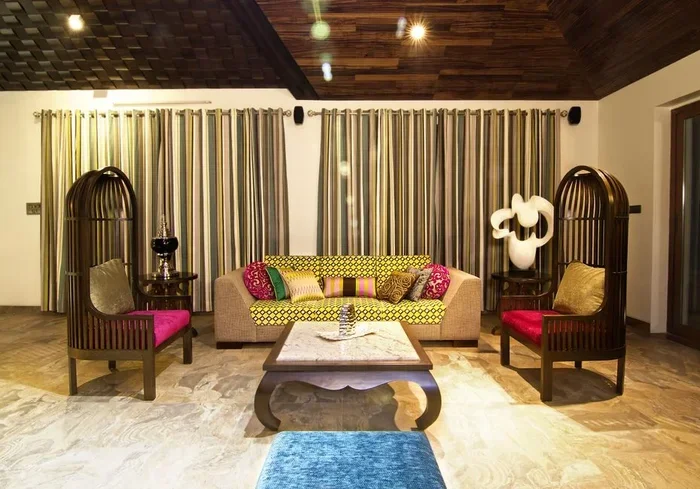
Dark stained beams create a dramatic, sophisticated look. Walnut, mahogany, or oak beams with a deep stain add richness and contrast to a room. This style suits traditional, classic, and even industrial living room designs.
A dark beam ceiling works especially well in rooms with high ceilings and large windows. The contrast between the dark wood and natural light creates a striking visual effect. You can complement it with accent pieces for living room in warm metallic tones like brass or copper.
Mixed Wood and Drywall Ceiling
Not ready to commit to a full wood ceiling? Try a hybrid approach. Install wood beams or planks in specific sections of the ceiling while keeping the rest as drywall. This creates a focal point without a complete overhaul. It is a smart compromise that still delivers the warmth of wood.
You can place wood panels above the fireplace, along the ceiling edges, or in a central strip. This technique adds dimension and interest while keeping costs lower than a full wood installation.
How to Install a Wood Ceiling in Your Living Room
Installing a wood ceiling is a rewarding project, but it requires careful planning. The process varies depending on the style you choose and whether you are working over an existing ceiling or open joists.
Step-by-Step Installation Process
- Measure your ceiling: Calculate the total square footage. Add 10 to 15 percent extra for cuts and waste.
- Choose your wood: Select planks or beams based on your design, budget, and room size. Common choices include pine, oak, cedar, and reclaimed timber.
- Prepare the surface: Clean the existing ceiling and repair any damage. Make sure the surface is dry and level.
- Install furring strips: Attach horizontal strips to the ceiling joists. These provide a secure base for your wood panels.
- Attach the wood: Nail or screw the planks or panels onto the furring strips. Work in rows, starting from one corner.
- Finish and seal: Sand any rough spots, apply stain or paint, and add a protective sealant to guard against moisture and wear.
DIY vs. Professional Installation
Simple plank ceilings can be a DIY project if you have basic carpentry skills and the right tools. However, more complex designs like coffered ceilings or heavy beam installations are best left to professionals. A poorly installed ceiling can lead to sagging, gaps, or moisture problems over time.
If you are unsure, get quotes from at least two or three contractors. Compare their experience with wood ceilings specifically, not just general drywall work. A skilled installer will ensure your wood ceiling looks beautiful and lasts for years.
Living Room Wood Ceiling Cost and Budget Tips
Cost is one of the biggest factors in any ceiling project. The price of a wood ceiling living room depends on several variables, including the type of wood, the complexity of the design, and whether you hire a professional.
| Ceiling Type | Material Cost per Sq Ft | Installation Cost per Sq Ft | Estimated Total (500 Sq Ft Room) |
|---|---|---|---|
| Wood Plank (DIY) | $2 – $8 | $0 (DIY) | $1,000 – $4,000 |
| Exposed Beams | $5 – $15 | $3 – $7 | $4,000 – $11,000 |
| Coffered Ceiling | $8 – $20 | $5 – $12 | $6,500 – $16,000 |
| Tongue and Groove | $3 – $10 | $2 – $5 | $2,500 – $7,500 |
These estimates are approximate and can vary based on your location and the specific wood species you choose. To save money, consider using less expensive woods like pine or poplar for the main surface and reserving premium wood for visible beams or accent pieces.
Another budget-friendly option is to use wood veneer panels instead of solid wood. Veneer gives you the same beautiful look at a fraction of the cost and weight. It is a great choice if you want the appearance of a real wood ceiling without the high price tag.
Caring for Your Wood Ceiling
A wood ceiling is a long-term investment, and proper care keeps it looking its best. The good news is that maintenance is not complicated, but it does require some regular attention.
Dust your ceiling regularly using a soft-bristle brush or a microfiber duster attached to an extension pole. This prevents buildup that can dull the wood’s appearance over time. Every few months, inspect the ceiling for any signs of moisture, cracking, or gaps between planks.
If your ceiling is unfinished or has a matte finish, consider applying a fresh coat of sealant every two to three years. This protects the wood from humidity, temperature changes, and everyday wear. In rooms with high humidity, such as those near bathrooms or kitchens, make sure your ventilation is adequate to prevent moisture damage.
Avoid using harsh chemical cleaners on your wood ceiling. A gentle cleaner mixed with water and a soft cloth is all you need. Always test any cleaning product on a small, hidden area first to make sure it does not damage the finish or change the color of the wood.
Pairs Well With These Living Room Styles
One of the best things about a wood ceiling is its versatility. It complements a wide range of interior design styles. Here are some styles that pair beautifully with a wood ceiling living room:
- Farmhouse: Reclaimed wood beams and a plank ceiling create the perfect cozy farmhouse atmosphere. Add shiplap walls and vintage furniture for a complete look.
- Modern Minimalist: A light wood plank ceiling with clean lines and neutral tones keeps the room feeling fresh and uncluttered.
- Bohemian: A wood ceiling adds warmth to a boho space filled with colorful textiles, plants, and eclectic furniture. Check out Afro Bohemian Living Room ideas for inspiration on mixing wood with bold decor.
- Industrial: Dark wood beams paired with exposed brick and metal fixtures create a rugged, urban feel.
- Mediterranean: Warm, honey-toned wood ceilings with arched details and terracotta accents bring a relaxed, coastal vibe to your living space.
You can also explore aesthetic living room ideas that incorporate wood ceilings with unique lighting fixtures, such as pendant lights or chandelier installations that hang from the beams. The combination of wood and light creates a stunning focal point that anchors the entire room.
Common Mistakes to Avoid
Before you start your wood ceiling project, keep these common mistakes in mind:
- Skipping moisture barriers: Wood and moisture do not mix well. Always install a moisture barrier between the ceiling structure and the wood to prevent warping and mold.
- Choosing the wrong wood for your climate: Some woods handle humidity better than others. Cedar and teak are naturally resistant to moisture, making them ideal for humid environments.
- Ignoring ceiling height: Heavy beams can make a low ceiling feel even lower. If your ceiling is under 8 feet, consider lighter wood plank designs instead of bulky beams.
- Forgetting about acoustics: Wood ceilings can affect room acoustics. If you have a home theater or entertainment area, consider adding acoustic insulation behind the wood panels.
- Using the wrong fasteners: Wood expands and contracts with temperature changes. Use screws or nails designed for wood-to-wood connections to prevent popping or loosening over time.
Final Thoughts on Living Room Wood Ceiling Ideas
A living room wood ceiling is more than just a design trend. It is a timeless feature that adds warmth, character, and value to your home. Whether you choose rustic beams, sleek planks, or an elegant coffered design, the right wood ceiling will transform your living room into a space you love spending time in.
Take your time planning the project. Consider your room size, existing decor, budget, and how much maintenance you are willing to do. The best wood ceiling is one that fits your lifestyle and reflects your personal style. Start with small changes if you are not ready for a full installation, and build from there. Your dream living room with a beautiful wood ceiling is closer than you think.
For more living room design inspiration, check out our guide on aesthetic living room ideas that covers everything from ceiling designs to furniture arrangement. You can also explore how to place furniture in a living room to make the most of your newly renovated space. And if you are interested in adding shelves that complement your wood ceiling, our open shelves styling guide offers practical tips to create a cohesive look.
Frequently Asked Questions
What is the best wood type for a living room ceiling?
Pine and cedar are popular choices for budget-friendly projects, while oak and walnut offer a more premium look. Cedar is naturally resistant to moisture, making it a great option for humid climates. Choose a wood that matches your budget, style preferences, and local climate conditions.
How much does it cost to install a wood ceiling in a living room?
Costs typically range from $1,500 for a simple DIY plank ceiling to $16,000 for a professional coffered ceiling installation. The final price depends on the wood type, ceiling size, design complexity, and whether you hire a contractor. Always get multiple quotes before committing to a project.
Can I install a wood ceiling myself?
Yes, simple plank or tongue-and-groove ceilings are DIY-friendly projects. You will need basic carpentry tools, some help with lifting and holding planks, and patience to ensure everything lines up correctly. Complex designs with beams or coffered panels are best handled by experienced professionals.
How do I maintain a wood ceiling in my living room?
Dust your wood ceiling regularly with a soft brush or microfiber duster. Inspect it every few months for moisture or cracking, and apply a fresh sealant every two to three years. Avoid harsh chemicals and keep room humidity levels stable to prevent warping or damage.
Will a wood ceiling make my living room feel smaller?
It depends on the design. Dark, heavy beams can make low ceilings feel more cramped. Light-colored wood planks, on the other hand, can actually make a room feel more open and airy. If you have a small living room, choose lighter woods and simpler designs to maintain a sense of space.
Can I paint a wood ceiling instead of leaving it natural?
Absolutely. Painting a wood ceiling is a popular way to adapt the look to your room’s color scheme. Use a ceiling-specific paint and apply a primer first for the best results. Keep in mind that painting will hide the natural wood grain, so consider whether you want to preserve that texture.