Beautiful Living Room Wall Molding Ideas For Every Home
Living room wall molding ideas can completely change how your space looks and feels. Whether you prefer classic crown molding or sleek modern trim, the right molding adds depth, character, and value to any room. This guide covers styles, colors, installation tips, and budget-friendly options so you can find the perfect look for your home.
Living room wall molding ideas are one of the easiest ways to upgrade your home’s look. Trim work gives walls a finished, polished feel that bare drywall simply cannot match. Whether you are remodeling or just refreshing a room, molding makes a huge difference.
Not sure where to start? This guide walks you through every style, color choice, and installation tip you need. You will find practical ideas that fit any budget and any taste. Let us dive in and explore how living room wall molding ideas can transform your space.
Key Takeaways
- Crown molding creates an elegant, high-end feel: It draws the eye upward and makes ceilings appear taller.
- Chair rail molding adds structure and charm: It divides walls into sections for a classic, timeless look.
- Modern molding styles keep things clean: Simple lines and minimal profiles suit contemporary spaces perfectly.
- Paint color matters just as much as shape: Bold colors or contrasting trim can make molding a real focal point.
- DIY installation is possible on a budget: Basic molding projects need only a few tools and some patience.
- Molding boosts home value: Buyers notice detailed trim work, making it a smart long-term investment.
📑 Table of Contents
- Why Wall Molding Matters in the Living Room
- Popular Wall Molding Styles for Living Rooms
- Modern Living Room Wall Molding Ideas
- Traditional and Classic Wall Molding Styles
- Colors and Finishes for Wall Molding
- DIY Tips for Installing Wall Molding
- Common Mistakes to Avoid with Wall Molding
- How Molding Boosts Your Living Room Decor
- Final Thoughts on Living Room Wall Molding Ideas
Why Wall Molding Matters in the Living Room
Wall molding does more than look pretty. It adds architectural detail that makes a room feel complete. Without molding, walls can look flat and unfinished, no matter how much money you spend on furniture or paint.
Molding also creates visual depth. It draws the eye around the room and highlights architectural features like windows, doors, and corners. When paired with the right furniture and accessories, molding ties the whole room together.
Here are a few reasons homeowners love adding molding:
- Instant elegance: Molding gives any room a refined, upscale appearance.
- Defines spaces: It helps separate areas in open floor plans.
- Boosts resale value: Buyers love homes with quality trim work.
- Hides imperfections: Molding covers gaps between walls and ceilings.
- Adds character: Different profiles create unique moods and styles.
Think of molding as a frame for a painting. It sets the tone for everything else in the room. That is why so many people start with wall molding designs when planning a living room refresh.
Popular Wall Molding Styles for Living Rooms
There are many molding styles to choose from. Each one brings a different vibe to your space. Let us look at the most popular options for living room wall molding ideas.
Crown Molding
Crown molding sits at the top of the wall where it meets the ceiling. It is the most classic and widely recognized type of trim. Crown molding makes ceilings look higher and adds a touch of sophistication.
This style works beautifully in both traditional and modern rooms. For a traditional look, choose a larger profile with detailed curves. For a modern feel, go with a slim, simple crown. You can also check out aesthetic living room ideas for inspiration on how molding fits into a curated look.
Chair Rail Molding
Chair rail molding runs horizontally about a third of the way up the wall. It originally protected walls from chair backs, but today it is all about style. Chair rail creates a natural dividing line that adds visual interest.
You can paint the upper and lower sections different colors for a striking effect. This style pairs well with wainscoting or shiplap for a layered look. It is especially popular in dining areas and living rooms with high ceilings.
Baseboard Molding
Baseboard molding runs along the bottom of the wall where it meets the floor. It is the most basic type of trim, but it still matters. A well-chosen baseboard gives the room a clean, finished edge.
Taller baseboards make a bold statement. Shorter ones keep things subtle. Either way, baseboard molding is essential for completing the look of any room.
Wainscoting with Molding
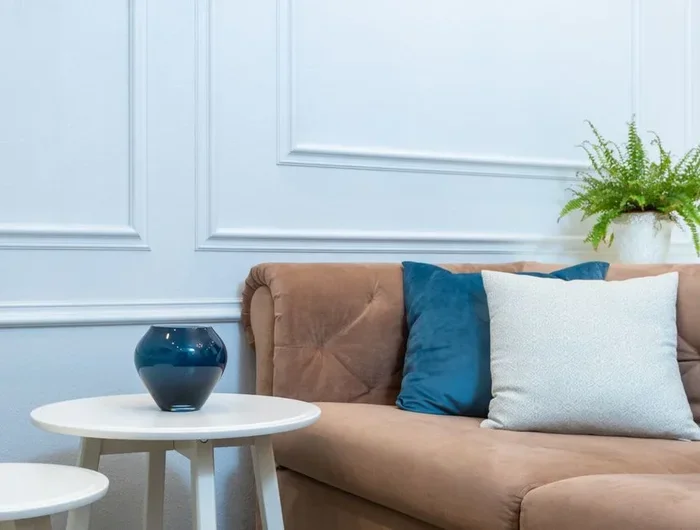
Wainscoting covers the lower half of the wall with panels, often framed by molding. It adds texture and dimension in a way that plain drywall cannot. Wainscoting feels timeless and works in almost any style of home.
This option is perfect if you want more than just a simple trim. It creates a cozy, refined atmosphere that feels intentional and polished.
Modern Living Room Wall Molding Ideas
If your home has a contemporary feel, you do not need to skip molding. Modern wall molding ideas focus on clean lines and minimal profiles. The goal is subtle enhancement, not ornate decoration.
Here are some modern approaches that work beautifully:
- Thin crown molding: A simple, narrow profile keeps things sleek.
- Flat panel wall molding: Creates a subtle, geometric look on feature walls.
- Box molding grids: Forms square or rectangular frames on walls for a stylish effect.
- Single horizontal trim: A simple chair rail or border adds structure without clutter.
Modern molding often uses the same paint color as the wall, so the trim blends in softly. This creates a very clean, uncluttered look. You can pair this approach with accent pieces for the living room to add personality without overwhelming the space.
Another great option is to use molding to frame built-in shelves or media units. This adds depth and makes your storage look intentional and designed. If you love open shelving, check out how to style open shelves in the living room for tips on combining molding with shelving.
Traditional and Classic Wall Molding Styles
Traditional homes benefit from more detailed, ornate molding profiles. These styles bring warmth and character that suit classic interiors.
Here are some classic approaches to consider:
- Ogee molding: Features an S-shaped profile that adds elegant curvature to walls and ceilings.
- Dentil molding: Uses small, evenly spaced blocks that create a refined, symmetrical pattern.
- Rosette corners: Decorative medallions at wall-ceiling corners for a luxurious finish.
- Multiple molding layers: Combining two or three trim pieces for a rich, dimensional look.
Traditional molding often pairs well with rich wood tones and warm paint colors. It feels at home in homes with classic architecture, but it can also add charm to newer builds. The key is to keep proportions balanced so the molding enhances rather than overwhelms the room.
For a cozy, layered look, try combining chair rail with crown molding. This gives you definition at two heights and makes the wall feel complete. You can find more inspiration for classic room designs in our collection of how to decorate shelves in the living room guides.
Colors and Finishes for Wall Molding
Choosing the right color for your molding is just as important as choosing the style. The wrong color can make even the best molding look out of place.
Here are the most popular approaches:
- White molding on white walls: Creates a subtle, seamless look. The molding adds texture without standing out too much.
- Contrasting trim: Dark molding on light walls (or vice versa) makes a bold statement and adds drama.
- Matched wall color: Painting molding the same color as the wall creates a soft, integrated feel.
- Gilded or metallic finishes: Gold or brass-toned molding adds a glamorous touch for special spaces.
For a timeless look, stick with white or cream. These colors work with any decor style and never go out of fashion. If you want something more daring, try painting molding a deep navy, charcoal, or even a rich emerald green.
Matte finishes hide imperfections well and feel modern. Glossy finishes reflect light and feel more formal. Semi-gloss is a great middle ground that is easy to clean and looks polished.
DIY Tips for Installing Wall Molding
Installing wall molding is easier than most people think. With the right tools and a little patience, you can do it yourself and save money on labor costs.
Here is what you need to get started:
- Molding of your choice: Measure your wall lengths before purchasing.
- Miter saw or miter box: For cutting clean angled corners.
- Brad nailer or finish nails: To secure molding to the wall.
- Measuring tape and pencil: For marking placement accurately.
- Paint and brushes: To finish and protect the molding.
- Wood filler and sandpaper: For filling nail holes and smoothing seams.
Start by measuring each wall and planning your cuts. Corners are the trickiest part, so take your time with miter cuts. Always dry-fit pieces before nailing them in place. This saves you from fixing mistakes later.
If you are new to DIY, start with a small section like one accent wall. Once you feel confident, you can tackle the entire room. Remember that practice makes perfect, and even small imperfections add character to handmade spaces.
Common Mistakes to Avoid with Wall Molding
Even with the best intentions, some common mistakes can ruin a molding project. Here is what to watch out for:
- Wrong scale: Too much molding on a small room feels crowded. Too little on a large room looks underwhelming. Match the molding size to your room proportions.
- Poor corner cuts: Sloppy miter joints stick out and look unprofessional. Take time to measure and cut carefully.
- Skipping the primer: Always prime before painting. Molding absorbs paint differently than drywall, and skipping primer leads to uneven coverage.
- Ignoring the ceiling line: If your ceiling is uneven, molding can follow the slope and look crooked. Use a level to mark your placement line.
- Choosing the wrong style: Mixing too many molding profiles creates visual clutter. Stick to one or two complementary styles per room.
Avoiding these mistakes will help your molding project look professional and polished. Even small details like consistent nail spacing and smooth caulking make a big difference in the final result.
How Molding Boosts Your Living Room Decor
Molding is more than a structural element. It is a design tool that elevates your entire living room. When you combine molding with the right furniture, lighting, and wall art, the room feels intentional and well-designed.
Consider using molding to frame a gallery wall or a large piece of art. This adds depth and draws attention to your favorite pieces. Molding also works well around fireplace surrounds, creating a focal point that anchors the room.
For those who love layered decor, molding provides the architectural foundation that ties everything together. Pair it with textured rugs, statement lighting, and curated accessories for a room that feels complete and cohesive.
The beauty of molding is that it works with virtually any decor style. From farmhouse to mid-century modern, from minimalist to maximalist, there is a molding profile that complements your vision. The key is choosing the right scale, color, and placement for your specific space.
Final Thoughts on Living Room Wall Molding Ideas
Living room wall molding ideas offer endless ways to refresh and elevate your home. Whether you choose a simple baseboard or an elaborate crown molding with rosettes, the right trim work transforms your space from ordinary to extraordinary.
Start by choosing a style that matches your home’s architecture and your personal taste. Then pick a color that complements your walls and furniture. Finally, install it carefully or hire a professional if needed. The result is a room that feels polished, intentional, and uniquely yours.
Molding is one of the most affordable ways to make a big impact. It does not require a full renovation or a huge budget. A few pieces of trim and some paint can completely change the feel of your living room. So go ahead, explore your options, and find the perfect wall molding designs for your home today.
Frequently Asked Questions
What is the best wall molding for a small living room?
Thin crown molding or simple flat panel molding works best in small rooms. These options add detail without making the space feel cramped. Avoid oversized or overly ornate profiles that can overwhelm a small area.
Can I install wall molding myself?
Yes, most wall molding projects are beginner-friendly. You need basic tools like a miter saw, nail gun, and measuring tape. Start with a small section to build confidence before tackling an entire room.
What color should I paint my wall molding?
White is the most popular and timeless choice. However, contrasting colors like dark navy or charcoal create a bold, modern look. Match the molding to your room’s overall color scheme for the best result.
How much does wall molding installation cost?
DIY installation keeps costs low, usually under $200 for a standard room. Hiring a professional ranges from $500 to $2,000 depending on the complexity and molding type. The materials themselves are very affordable.
What is the difference between crown molding and wall molding?
Crown molding sits at the top of the wall where it meets the ceiling. Wall molding includes any decorative trim on the wall surface, such as chair rail, baseboard, or panel molding. Crown molding is just one type of wall molding.
Do I need molding in every room?
No, molding is optional in every room. However, it adds visual interest and architectural detail that bare walls lack. Even adding molding to just one or two rooms can make a noticeable difference in your home’s overall feel.