Attic Living Room Ideas That Will Transform Your Home
Attic living room ideas can turn an overlooked space into the heart of your home. Whether you have sloped ceilings or dormer windows, there is a design that fits your style. These ideas cover layout, lighting, color, and storage for a functional and beautiful room. Read on to discover how to make your attic feel warm and inviting.
Have you ever looked up at your attic and imagined what it could become? attic living room ideas are more popular than ever, and for good reason. That unused space under your roof holds incredible potential. With the right approach, you can create a room that feels like it was always meant to be there.
Turning an attic into a living room is one of the best home improvement projects you can tackle. It adds value to your property and gives you a brand-new space to enjoy every single day. Whether your attic is large or small, tall or sloped, there are plenty of ways to make it work beautifully.
In this guide, we will walk you through everything you need to know. From layout tips to decor inspiration, you will find practical ideas you can start using right away. Let us dive in and explore how to transform your attic into a stunning living room.
Key Takeaways
- Sloped Ceilings Are an Asset: Embrace the unique shape of your attic to create cozy nooks and dramatic visual interest.
- Lighting Is Everything: Use a mix of natural and artificial light to make attic spaces feel open and welcoming.
- Storage Solutions Maximize Space: Built-in shelves and under-eave cabinets keep your attic living room tidy and functional.
- Color and Texture Set the Mood: Light tones and warm materials make small attic rooms feel spacious and comfortable.
- Mix Styles Freely: Attic living rooms pair beautifully with rustic, modern, bohemian, or Scandinavian design themes.
- Insulation and Comfort Matter: Proper insulation and flooring choices make your attic usable year-round.
📑 Table of Contents
- Why an Attic Living Room Is a Smart Choice
- Best Layout Ideas for Your Attic Living Room
- Lighting Solutions That Brighten Your Attic
- Design Styles That Suit Attic Living Rooms
- Color Schemes and Decor Tips
- Insulation, Climate, and Comfort
- Common Mistakes to Avoid in Attic Living Room Projects
- Quick Tips for a Stunning Attic Living Room
- Conclusion
Why an Attic Living Room Is a Smart Choice
Not every home has extra square footage waiting to be used. An attic conversion gives you a built-in room without the cost of a full addition. It is one of the most efficient ways to expand your living space.
Here are some reasons why homeowners love turning their attic into a living room:
- Cost-effective: An attic renovation usually costs less than building outward.
- Increases home value: A well-designed attic living space adds significant resale value.
- Unique character: Sloped ceilings and dormer windows give the room a charm that standard rooms simply do not have.
- Natural light: Many attic spaces come with skylights or rooftop windows that flood the room with warmth.
- Privacy: An attic living room often feels tucked away and serene, perfect for a quiet retreat.
Before you start designing, take a close look at your attic. Check the ceiling height, the direction of the slope, and how much natural light enters the space. These factors will shape every design decision you make going forward.
Best Layout Ideas for Your Attic Living Room
Layout is the foundation of any great attic living room. The shape of the space will guide where you place your furniture and how you arrange the room. Let us look at some proven layout strategies that work beautifully in attic settings.
Work With the Slope, Not Against It
Sloped ceilings are the defining feature of any attic. Instead of fighting this shape, use it to your advantage. Place low-profile furniture along the lower walls to keep the room feeling open. You can also build custom seating or storage that follows the angle of the ceiling. This creates a seamless, built-in look that makes the most of every inch.
One popular approach is to position your sofa and main seating area in the center of the room, where the ceiling is tallest. This gives you headroom and makes the space feel balanced. Then, use the lower areas along the edges for side tables, bookshelves, or a small reading nook.
Create Zones in Larger Attic Spaces
If your attic is on the larger side, consider dividing it into distinct zones. You might have a seating area, a reading corner, and a small workspace. Use rugs, lighting, or furniture arrangement to define each zone. This keeps the room feeling organized without closing it off.
For families, creating a kids’ play zone in one corner of the attic works wonderfully. It gives children their own space while keeping the main living area calm and relaxed.
Use the Eaves Creatively
The area under the eaves is often wasted space. Build custom cabinets or shallow shelves that fit right into those tight spots. This type of attic storage is both functional and stylish. It also draws the eye along the walls, making the room feel more intentional and polished.
Lighting Solutions That Brighten Your Attic
Lighting can make or break an attic living room. Because these spaces often have limited window access, you need to be strategic about how you bring in light. The right lighting plan will make your attic feel warm, open, and welcoming all day long.
Maximize Natural Light
If your attic has dormer windows or skylights, you already have a huge advantage. Keep window treatments light and airy so sunlight can flow freely. Sheer curtains or simple blinds let the most light in while still giving you privacy.
For attic spaces without many windows, consider adding a rooftop skylight or solar tubes. These bring daylight deep into the room and make a dramatic difference. Even a single skylight can completely change the feel of a dark attic.
Layer Your Artificial Lighting
A well-lit attic living room uses multiple light sources at different heights. Here is what works best:
- Overhead lights: Choose flush-mount or semi-flush fixtures that do not clash with sloped ceilings.
- Task lighting: Add a reading lamp or wall-mounted sconce near your favorite chair.
- Ambient lighting: String lights or LED strips along the ceiling edges create a soft, cozy glow.
- Accent lighting: Use small spotlights to highlight artwork or architectural details.
Warm-toned bulbs work best for attic living rooms. They create a relaxed atmosphere that makes the space feel like a true retreat. Avoid harsh white lights, which can make sloped ceilings feel even more restrictive.
Design Styles That Suit Attic Living Rooms
One of the best things about an attic living room is that it pairs well with almost any design style. The unique architecture gives you a beautiful backdrop to experiment with different aesthetics. Here are some of the most popular styles homeowners choose.
Rustic and Cozy
A rustic attic living room feels like a warm cabin retreat. Use exposed wood beams, stone accents, and plush textiles to build that cozy atmosphere. A fireplace, even a small electric one, adds the perfect finishing touch. This style works especially well in attic renovation projects where the original wood structure is visible.
Modern and Minimal
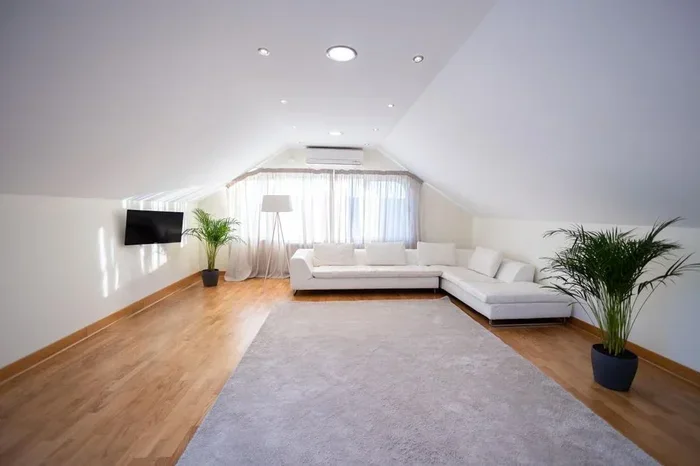
For a clean, contemporary look, pair white walls with simple furniture in neutral tones. A low-profile sofa, a glass coffee table, and minimalist decor keep the space feeling open. Modern attic designs often use bold geometric shapes and metallic accents to contrast with the traditional roof structure.
Boho and Eclectic
Bohemian style brings personality and warmth to any attic space. Mix patterns, textures, and colors freely. Add macrame hangings, woven rugs, and plenty of plants. An eclectic attic living room feels personal and inviting, with no two corners looking the same.
Scandinavian and Light
The Scandinavian style focuses on light colors, clean lines, and natural materials. White walls, light wood floors, and simple furniture make even a small attic feel spacious. Add soft throws and a few green plants for that signature Hygge feel.
Color Schemes and Decor Tips
Choosing the right colors for your attic living room can completely change how the space feels. Light colors reflect natural light and make the room appear larger. Dark colors add drama and coziness but work best in rooms with plenty of windows.
Here are some proven color combinations for attic living rooms:
- White and warm wood: A timeless combo that feels fresh and airy.
- Soft gray and beige: Neutral and elegant, these tones work with any furniture style.
- Sage green and cream: A calming, nature-inspired palette perfect for a relaxing retreat.
- Navy and gold accents: Adds a touch of sophistication and warmth to darker attic spaces.
When it comes to decor, keep the scale of your furniture proportional to the room. Oversized sofas will make a small attic feel cramped. Opt for compact, multi-functional pieces instead. A storage ottoman, for example, gives you seating and hidden storage in one.
Do not forget about the flooring. Since attics can be tricky with temperature, choose materials that feel warm underfoot. Engineered wood, laminate, or even plush area rugs work great. If your attic has exposed beams, a soft rug in the seating area adds comfort and visual interest.
Insulation, Climate, and Comfort
An attic living room needs proper insulation to be comfortable year-round. Heat rises, which means your attic can get very warm in summer and quite cold in winter. Investing in quality insulation is one of the smartest things you can do for your attic renovation.
Start with the roof and walls. Spray foam insulation works well for attics with irregular shapes. It fills gaps and creates an effective thermal barrier. Also, consider adding insulation under the floor if you plan to install a new attic flooring surface.
Ventilation is equally important. A well-ventilated attic prevents moisture buildup and keeps the air fresh. If you are converting a large portion of your attic, consult a professional to make sure the ventilation meets local building codes.
For heating and cooling, a ductless mini-split system is a popular choice. It is efficient, easy to install, and lets you control the temperature in your attic living room independently from the rest of the house.
Common Mistakes to Avoid in Attic Living Room Projects
Even with the best intentions, attic conversions can go wrong if you skip important steps. Here are some common mistakes homeowners make and how to avoid them.
- Ignoring building codes: Before you start any attic renovation, check your local building regulations. Some areas require permits for attic conversions, especially if you are adding egress windows or changing the structural layout.
- Skipping insulation: A poorly insulated attic will be uncomfortable no matter how beautiful the design is. Always prioritize insulation and climate control.
- Choosing the wrong furniture: Furniture that is too large or too tall will fight the slope of your ceiling. Measure your space carefully and choose pieces that fit the room’s proportions.
- Overlooking electrical needs: Plan your outlets, switches, and lighting fixtures before you start decorating. Running new wiring in an attic can be tricky, so involve an electrician early in the process.
- Forgetting about headroom: Not every spot in your attic will have enough height for standing. Design your layout around the areas with the most clearance, and use low furniture in the tighter spots.
Avoiding these pitfalls will save you time, money, and frustration. A well-planned attic living room project delivers results that last for years.
Quick Tips for a Stunning Attic Living Room
Here are some fast, actionable tips you can use right away:
- Use mirrors to bounce light around the room and make it feel larger.
- Paint the ceiling the same color as the walls to blur the slope and create a seamless look.
- Add a tall bookshelf to draw the eye upward and emphasize the height of the room.
- Choose lightweight, movable furniture so you can rearrange the layout easily.
- Incorporate plenty of soft textiles like cushions, throws, and curtains for a cozy feel.
- Use wall-mounted shelves to free up floor space and keep the room feeling open.
Conclusion
Attic living room ideas offer endless possibilities for homeowners who want to make the most of their unused space. From working with sloped ceilings to choosing the right lighting and color palette, every decision you make brings you closer to a room you will love spending time in. The key is to plan carefully, embrace the unique character of your attic, and let your personal style shine through.
Whether you go for a rustic retreat, a modern minimalist space, or a bohemian hideaway, your attic living room can become the most cherished spot in your home. Start with one idea from this guide, take it step by step, and watch your attic transform into something truly special.
Your dream living room might be just up the stairs and under the roof. All it takes is a little creativity and the right approach. You have got this.
Frequently Asked Questions
What is the best color palette for a small attic living room?
Light and neutral tones like white, soft gray, and beige work best for small attic spaces. These colors reflect natural light and make the room feel more open. You can add accent colors through pillows, rugs, and artwork to bring personality without overwhelming the space.
Do I need planning permission to convert my attic into a living room?
Building regulations vary by location. In many areas, you will need a permit for an attic conversion, especially if you are changing the structure or adding new windows. Always check with your local building authority before starting any attic renovation project.
How can I make a sloped ceiling attic living room feel less cramped?
Use low-profile furniture and keep the ceiling painted the same color as the walls to blur the slope. Add plenty of light through mirrors and bright lighting fixtures. Avoid tall, bulky pieces that will make the room feel even smaller.
What type of flooring works best in an attic living room?
Engineered wood and laminate are popular choices because they are durable and feel warm underfoot. Area rugs are also a great option because they add comfort and style while protecting the attic floor surface. Choose materials that handle temperature changes well.
Can I use my attic living room year-round?
Yes, with proper insulation and climate control, your attic living room can be comfortable in every season. A ductless mini-split system is an excellent option for heating and cooling attic spaces efficiently. Good ventilation also helps maintain a pleasant temperature year-round.
What are the most affordable ways to decorate an attic living room?
Paint the walls a light color, add affordable area rugs, and use wall-mounted shelves instead of bulky furniture. Thrift stores and online marketplaces offer great finds for decor items. Even simple changes like new throw pillows and curtains can completely refresh the look of your attic living space.