Living Room Built In Bookshelves Designs You Will Love
Living room built in bookshelves transform any space into a stylish, functional retreat. These custom shelves boost storage, add architectural interest, and increase home value. Whether you prefer modern, rustic, or classic looks, there is a design for you. You will learn top styles, materials, installation tips, and creative styling ideas. Let us explore the best built in bookshelf designs you can bring to life today.
Nothing beats the warm, inviting feel of a well-designed living room. One feature that instantly elevates any space is living room built in bookshelves. These custom shelves do more than hold books. They add character, boost storage, and give your room a polished, intentional look.
Maybe you have a blank wall that feels bare. Or perhaps your current shelves look outdated and flat. Either way, built in bookshelf designs offer a fresh solution. They fit snugly against your walls, use every inch of space, and turn a dull corner into a focal point.
In this guide, we will walk you through the best designs, materials, and styling tips. You will find ideas that suit small rooms and large ones too. By the end, you will feel confident about choosing the perfect custom bookshelf for your home.
Key Takeaways
- Built-in bookshelves add both charm and function: They give you extra storage while making your living room look polished and put-together.
- Many styles fit every taste: From modern minimalist to cozy farmhouse, there is a design that matches your home.
- Materials matter for durability and look: Wood, MDF, and laminate each offer different benefits for your space.
- Proper installation makes all the difference: Hiring a pro or doing it yourself both work, but planning is key.
- Styling tips elevate the whole look: Mixing books, plants, and decor items creates visual depth and warmth.
- Built-ins can increase home value: Potential buyers love custom storage features in the living room.
- Lighting and trim details complete the design: Small touches like LED strips and crown molding make shelves look premium.
📑 Table of Contents
- Why Living Room Built In Bookshelves Are Worth It
- Popular Living Room Built In Bookshelves Styles
- Best Materials for Built-In Bookshelves
- Design Ideas and Layout Tips
- How to Install Living Room Built In Bookshelves
- Styling Your Built-In Bookshelves Like a Pro
- Common Mistakes to Avoid
- Expert Insights on Built-In Bookshelves
- Cost Breakdown for Living Room Built In Bookshelves
- Maintenance and Care Tips
- Final Thoughts
Why Living Room Built In Bookshelves Are Worth It
They Maximize Your Space
Built-in shelves hug your walls tightly. Unlike freestanding units, they use every nook and cranny. This is especially great for rooms with awkward corners or angled ceilings. A floor-to-ceiling bookshelf draws the eye upward and makes your room feel larger.
They Add Real Estate Value
Homebuyers love custom features. A beautifully crafted built-in cabinetry unit signals quality and care. It shows the home has been thoughtfully designed. This small investment can pay off when it is time to sell.
They Offer Unlimited Storage
Books, decor, baskets, and hidden storage — built-ins handle it all. You can add drawers, cabinets, and open shelves in one unit. This keeps your living room tidy and organized without sacrificing style.
Popular Living Room Built In Bookshelves Styles
Modern Minimalist
Clean lines and simple shapes define this look. Think floating shelves in a row with no extra trim. Neutral colors like white, gray, or soft black work best. Add a few plants or art pieces for a touch of warmth.
Classic Traditional
This style uses crown molding and detailed trim. The shelves feel rich and elegant. Dark wood tones like walnut or cherry give a timeless feel. You might also see glass doors to protect collectibles from dust.
Rustic Farmhouse
Reclaimed wood and rough textures are the stars here. Open shelves with wooden brackets create a cozy, cabin-like vibe. Pair with woven baskets and vintage decor for a complete look.
Mid-Century Modern
This style blends clean lines with warm wood tones. Tapered legs and angled shelves add a retro feel. It works beautifully in rooms with natural light and neutral walls.
Best Materials for Built-In Bookshelves
Choosing the right material shapes both the look and durability of your shelves. Here are the top options to consider for your living room built in bookshelves project.
| Material | Best For | Durability | Cost Level |
|---|---|---|---|
| Plywood | Strong, budget-friendly builds | High | Medium |
| Solid Wood | Premium, timeless look | Very High | High |
| MDF | Smooth, paint-ready surfaces | Medium | Low |
| Laminate | Moisture-resistant, easy clean | High | Medium |
| Reclaimed Wood | Rustic, character-rich designs | High | Medium |
Wood and Plywood
Solid wood gives your shelves a premium feel. Oak, pine, and maple are popular choices. Plywood is a smart alternative. It is strong, stable, and costs less. Many homeowners choose plywood for the main frame and solid wood for the face frame.
MDF and Laminate
MDF is smooth and easy to paint. It works well for a sleek, modern look. Laminate finishes resist scratches and moisture. Both options are budget-friendly for bookshelf design ideas on a tighter budget.
Reclaimed and Rustic Wood
If you love character, reclaimed wood is hard to beat. Each plank has its own story. Scratches and grain patterns add warmth. This material shines in farmhouse and industrial-style rooms.
Design Ideas and Layout Tips
Symmetrical Shelving
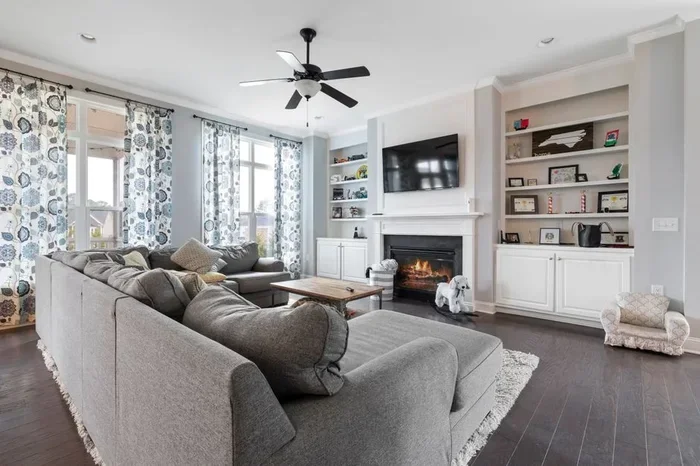
Symmetry creates a balanced, calming look. Place two matching wall-mounted bookshelf units on either side of a window or fireplace. Use the same spacing and shelf sizes. This approach works beautifully in formal living rooms.
Asymmetrical and Playful Layouts
Not every room needs perfect balance. Try mixing shelf sizes and shapes. Add a narrow column next to a wide one. This creates visual interest and feels more casual. It is perfect for modern living rooms with a relaxed vibe.
L-Shaped and U-Shaped Configurations
An L-shaped unit wraps around two walls. A U-shaped unit creates a cozy nook. Both layouts offer tons of storage. They work great in corners or under windows. Add a cushioned seat inside the U for a reading nook feel.
Niche Shelving
If your room has recessed areas or alcoves, use them. Niche shelving fits right into the wall. It feels built-in without the construction. Paint the back wall a contrasting color to make the shelves pop.
How to Install Living Room Built In Bookshelves
DIY vs. Professional Installation
Some homeowners love a good DIY project. If you are handy with tools, you can build built-in wall units yourself. Start with a solid plan and precise measurements. However, complex designs with custom trim and molding may need a professional touch.
Step-by-Step Installation Process
- Measure your wall space carefully. Note any obstacles like outlets or vents.
- Choose your design and draw a detailed plan. Include shelf heights and depths.
- Prepare the wall. Patch any holes and sand smooth.
- Build or assemble the shelf units on the floor.
- Secure the unit to wall studs using heavy-duty brackets.
- Add trim, molding, and baseboards for a polished finish.
- Sand, prime, and paint or stain to match your room.
Quick Tips for a Flawless Finish
- Always use a level during installation. Crooked shelves look messy.
- Pre-drill holes to avoid wood splitting.
- Use wall anchors for extra support on drywall.
- Let paint or stain dry fully before loading shelves.
- Check that the unit is flush against the wall before securing.
Styling Your Built-In Bookshelves Like a Pro
Mix Books with Decor
Stack some books horizontally and stand others vertically. This mix adds texture and variety. Tuck in small decor items between book stacks. Think candles, small plants, or framed photos.
Add Plants and Greenery
A few potted plants breathe life into any shelf. Ferns, succulents, and trailing vines look stunning. They soften the hard edges of books and wood. This is one of the easiest ways to make your decorative bookshelf feel fresh.
Use Lighting to Set the Mood
LED strip lights tucked under shelves create a warm glow. They highlight your favorite books and decor pieces. You can also add small spotlights for a dramatic effect. Lighting makes your shelves a true room focal point.
Group Items by Color or Theme
For a curated look, group items by color. Place all your blue books together or arrange vases from light to dark. This creates a visual rhythm that feels intentional and polished.
Leave Breathing Room
Do not fill every inch of shelf space. Empty space lets the eye rest. It also prevents the shelves from looking cluttered. A few well-placed items speak louder than a crowded display.
Common Mistakes to Avoid
Building living room built in bookshelves is exciting, but mistakes happen. Here are pitfalls to watch out for.
- Skipping the planning phase: Measuring wrong leads to wasted materials and frustration. Always double-check dimensions before cutting.
- Ignoring the room’s flow: Shelves should complement your furniture layout, not block pathways or windows.
- Using the wrong hardware: Weak brackets or short screws can cause shelves to sag. Invest in quality wall anchors and supports.
- Overloading shelves: Heavy books need strong shelves. Spread weight evenly and use thicker wood for long spans.
- Forgetting about electrical outlets: Build around existing outlets and switches. Covering them with shelves creates safety hazards.
- Choosing style over function: A beautiful design that is hard to clean or access will frustrate you daily. Balance looks with practicality.
Expert Insights on Built-In Bookshelves
Interior designers agree that built-in cabinetry is one of the most impactful upgrades you can make. According to home design experts, shelves that align with your room’s architecture feel seamless and intentional. They also note that adding trim and molding ties the whole unit together, making it look custom-crafted rather than assembled.
One designer shared a simple rule: “Let the shelves serve the room, not the other way around.” This means choosing a design that fits your lifestyle. If you have kids or pets, opt for sturdy construction and secure anchoring. If you love showing off collections, prioritize open shelves with good lighting.
Another expert suggests thinking about home library design from the start. Plan your shelf layout around how you actually use the space. Do you need a spot for your reading lamp? A place for your favorite records? These small details make a big difference in how much you enjoy your built-ins every day.
Cost Breakdown for Living Room Built In Bookshelves
The cost of custom bookshelves varies based on materials, size, and complexity. Here is a general idea of what to expect.
- Basic DIY project: $200 to $500 for materials like plywood, paint, and hardware.
- Mid-range custom build: $500 to $1,500 including solid wood and professional trim work.
- High-end custom installation: $1,500 to $5,000+ with premium wood, lighting, and full design service.
Remember that built-ins can boost your home’s resale value. Many real estate professionals consider them a strong selling point. The return on investment often exceeds the initial cost.
Maintenance and Care Tips
Keeping your built-in bookshelf looking great is simple. Dust shelves weekly with a soft cloth. Use a mild wood cleaner for solid wood surfaces. Avoid harsh chemicals that can strip finishes. For MDF and laminate, a damp cloth works well.
Check screws and brackets once a year. Tighten any loose hardware to keep shelves stable. If you notice warping or damage, address it early. Small fixes prevent bigger problems down the road.
Final Thoughts
Living room built in bookshelves are more than just storage. They are a design statement that reflects your personality and style. Whether you choose a sleek modern look or a warm traditional feel, custom shelves bring warmth and function to any room.
Start by measuring your space and choosing a style that fits your home. Pick materials that match your budget and lifestyle. Then have fun styling your shelves with books, plants, and personal touches. The result is a living room that feels complete, inviting, and uniquely yours.
Take the first step today. Browse design ideas, sketch a rough plan, or talk to a local carpenter. Your dream built in bookshelf is closer than you think.
Frequently Asked Questions
What are the best materials for living room built in bookshelves?
Plywood, solid wood, and MDF are the most popular choices. Solid wood offers the premium look and lasting durability. Plywood balances strength and cost. MDF works well for a smooth, paint-ready finish on a budget.
Can I install built-in bookshelves myself?
Yes, if you have basic carpentry skills and the right tools. Simple designs with pre-built units are great for DIY. Complex designs with custom trim and molding may benefit from professional help. Always measure twice and use a level for best results.
How much does it cost to build custom bookshelves?
Costs range from $200 for a basic DIY project to $5,000 or more for high-end custom builds. The price depends on materials, size, and whether you hire a professional. Most homeowners spend between $500 and $1,500 for a quality mid-range unit.
Do built-in bookshelves add value to a home?
Yes, they do. Custom built-in features are a sought-after selling point. They signal quality craftsmanship and thoughtful design. Many real estate agents recommend built-ins as a worthwhile home improvement investment.
What is the best way to style a built-in bookshelf?
Mix vertical and horizontal book stacking. Add plants, candles, and small art pieces for visual interest. Use LED strip lights for a warm glow. Leave some empty space to keep the look clean and uncluttered.
How do I choose the right shelf height and depth?
Standard shelf depth is 10 to 12 inches for most books. Adjust heights based on what you will store. Taller shelves work for large books and decor items. Shorter shelves are great for baskets and smaller objects. Plan your layout around your actual storage needs.
=== CONCLUSION ===
Living room built in bookshelves are a timeless upgrade that brings style and function together. From choosing the right materials to styling each shelf with care, every detail matters. You now have the ideas, tips, and guidance to create a stunning built in bookshelf that fits your home perfectly. Start planning today and enjoy a living room that feels complete, warm, and uniquely yours.