Smart Ways to Hide a Dog Crate in Your Living Room
Learn how to hide a dog crate in living room without sacrificing style or your pet’s comfort. From decorative covers to custom-built furniture, these practical tips help you create a pet-friendly living space that looks great and keeps your furry friend safe and happy. Whether you have a small apartment or a large family room, there is a solution that works for you.
Your living room is the heart of your home. It is where you relax, entertain guests, and spend quality time with family. But if you also use a dog crate in the living room, it can sometimes feel like an eyesore. The good news is that you do not have to choose between a stylish space and a safe space for your pet. There are many smart ways to hide a dog crate in living room setups without making your dog feel isolated or uncomfortable.
Whether you are crate training a new puppy or giving your adult dog a cozy den, the way you position and cover the crate matters. A well-hidden crate can actually enhance your room’s design instead of disrupting it. In this guide, we will walk you through practical, creative, and budget-friendly ideas that real pet owners use every day. You will learn how to choose the best spot, pick the right cover, and build custom solutions that fit your unique space.
The goal is simple. You want a pet-friendly living room that looks beautiful and keeps your dog feeling secure. Let us dive into the best strategies for making that happen.
Key Takeaways
- Choose the right spot: Place the crate in a corner or low-traffic area to keep it out of sight while still giving your dog a sense of belonging.
- Use decorative covers: Custom crate covers and curtains are an easy and affordable way to blend the crate into your living room decor.
- Build a furniture frame: Turning the crate into a side table or bookshelf hides it completely and adds functional design to your space.
- Use room dividers and screens: A folding screen or plant stand can block the crate from view without closing it off entirely.
- Prioritize airflow and comfort: No matter which method you choose, make sure your dog has proper ventilation and enough room to stand and turn around.
- Match your home style: Choose fabrics, colors, and materials that complement your living room so the crate area looks intentional, not hidden.
- Keep safety in mind: Always remove collars before crating and check that the cover does not block air vents or trap heat.
📑 Table of Contents
- Why You Might Want to Hide a Dog Crate in the Living Room
- Choosing the Right Crate Placement
- Creative Ways to Hide a Dog Crate in Living Room
- DIY Dog Crate Covers and Curtains
- Built-In Crate Solutions for Your Living Room
- Keeping Your Dog Comfortable and Safe
- Comparing Different Hiding Methods
- Final Thoughts
Why You Might Want to Hide a Dog Crate in the Living Room
Keeping Your Home Decor Looking Clean
Let us be honest. A metal wire crate sitting in the middle of a beautifully decorated living room can look out of place. Many pet owners love the crate training benefits but struggle with how the crate affects their room’s appearance. A hidden crate keeps your living space looking polished and intentional.
Creating a Safe Zone for Your Dog
Dogs naturally seek out small, enclosed spaces where they feel safe. A crate serves as their personal den. But if the crate is too exposed, it can make your dog feel anxious rather than secure. Placing the crate in a quiet corner or behind a screen gives your dog the privacy they need while still keeping them part of the family.
Balancing Function and Style
Modern pet-friendly design is all about balance. You do not need to sacrifice your aesthetic for your pet’s comfort. With the right approach, your crate can blend seamlessly into your living room furniture and decor. Think of it as a design challenge rather than a limitation.
Choosing the Right Crate Placement
Corner Spots That Work Wonders
The easiest way to hide a crate is to place it in a corner. Corners naturally draw less attention and give the crate a built-in backdrop. Try tucking the crate into a corner behind a sofa or chair. This keeps it out of the main walkway and makes the room feel more open.
Low-Traffic Areas
Avoid placing the crate near doors or high-traffic walkways. Dogs need calm environments to feel relaxed in their crate. A quiet corner near a window can work well because it gives your dog something to watch without being in the middle of the action.
Consider the Room Layout
Take a look at your living room furniture arrangement. Where do your eyes naturally go when you walk in? That is probably where the crate should not be. Instead, look for spots that are naturally hidden by furniture like bookshelves, console tables, or large plants.
Quick Tip: Before you commit to a spot, sit in different parts of the room and look at the crate from your main seating area. If you barely notice it, you have found the perfect spot.
Creative Ways to Hide a Dog Crate in Living Room
Use a Decorative Crate Cover
A dog crate cover is one of the simplest and most effective solutions. You can buy ready-made covers in various fabrics and patterns or make your own. A cover instantly transforms the look of the crate and helps it blend with your living room decor.
When choosing a cover, look for breathable materials like canvas or cotton. Avoid thick fabrics that trap heat. A good cover should block the view while still allowing air to flow through the crate.
Add a Room Divider or Folding Screen
A folding screen or room divider is a stylish way to block the crate from view. You can place the screen between the crate and your main seating area. This works especially well in open-plan living rooms where the crate might otherwise be visible from every angle.
Room dividers come in many styles, from bamboo to fabric to wood. Choose one that matches your living room makeover theme. A wooden screen with a plant on each side can make the crate area look like a intentional nook.
Build a Crate-Furniture Hybrid
This is one of the most popular ideas among pet owners who love DIY projects. You can build a frame around the crate that turns it into a side table, a bookshelf, or even a bench. The top surface becomes functional storage or display space, and the crate is completely hidden from view.
Search online for crate furniture plans. Many are simple to build with basic tools and affordable materials. The result looks like a piece of custom furniture, not a dog crate.
Use Curtains or Drapes
Hanging curtains around the crate is a quick and budget-friendly option. You can install a simple curtain rod above the crate and use a curtain that matches your room’s color scheme. Pull the curtain closed when your dog is in the crate, and open it when they are out.
This method works well in rooms with a natural partition or alcove. It gives the crate a soft, cozy feel that dogs seem to love. Just make sure the curtains are lightweight enough to allow airflow.
Surround It with Plants and Decor
Large indoor plants can act as natural barriers that hide the crate without blocking light or air. Place tall plants like fiddle leaf figs or snake plants on either side of the crate. Add a small side table or decorative basket on top to complete the look.
This approach creates a pet zone that feels like a natural part of your room. It also adds warmth and texture to your living space, which benefits both you and your dog.
DIY Dog Crate Covers and Curtains
Materials You Will Need
Making your own crate cover is easier than you might think. Here is what you need:
- A measuring tape
- Fabric that matches your room (canvas, cotton, or linen work best)
- Scissors
- A hot glue gun or sewing kit
- Velcro strips or hooks for attachment
Step-by-Step Guide
First, measure the dimensions of your crate from top to bottom and side to side. Cut the fabric so it covers all four sides and the top, leaving a few extra inches on each side for folding. Hem the edges if needed to prevent fraying.
Next, attach the fabric to the crate using velcro strips. This makes it easy to remove the cover for washing. Make sure the bottom edge does not drag on the floor, as this can collect dust and reduce airflow.
Quick Tip: Choose a fabric with a breathable weave. Your dog needs good air circulation inside the crate, especially during warmer months. Avoid plastic covers or non-breathable materials that can trap heat and moisture.
Adding Personal Touches
Make the cover feel like part of your room by adding trim, buttons, or a patterned fabric. You can also add a small pocket on the side for treats or toys. These small details make the crate area look intentional and stylish rather than like a pet accessory you are trying to hide.
Built-In Crate Solutions for Your Living Room
Built-In Wall Units
If you are planning a major living room renovation, consider a built-in wall unit that incorporates the crate. A custom-built cabinet with a door that swings open or slides away can hide the crate completely. When your dog is inside, the door closes. When they are out, it looks like a normal piece of furniture.
This is a more expensive option, but it offers the cleanest look. Many interior designers now include pet-friendly features in their living room designs, and a built-in crate is a great example of pet-friendly design done right.
Under-Window Crate Nook
Many living rooms have a window ledge or alcove that can be converted into a crate nook. Build a small platform or frame that fits the crate snugly under the window. Add a cushion inside for comfort and a small shelf above for plants or books.
This spot is often overlooked in room design, making it a perfect hidden location for a crate. Your dog will also enjoy the natural light and view of the outdoors, which can be calming and enriching.
Behind a Console Table
A low console table placed in front of the crate can do wonders for hiding it from view. Choose a table that is tall enough to block the crate but not so tall that it makes the room feel cramped. Style the table with lamps, books, and decorative objects to make it look like a normal piece of furniture.
This is one of the simplest solutions because it requires no construction or sewing. Just place the crate behind the table and adjust the angle until it is no longer visible from your main seating position.
Keeping Your Dog Comfortable and Safe
Airflow Is Essential
No matter which hiding method you choose, never block the airflow to the crate. Dogs need fresh air circulating inside the crate, especially during warm weather. Avoid covering more than two sides of the crate, and never use a cover that touches your dog directly.
Look for covers with mesh panels or breathable fabric. You can also use crate fans designed for pets to keep the air moving. A well-ventilated crate keeps your dog cool, dry, and comfortable.
Make Sure the Crate Is the Right Size
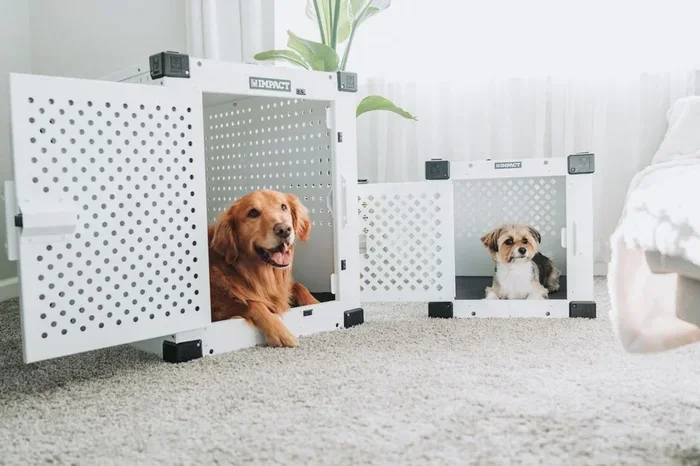
The crate should be large enough for your dog to stand up, turn around, and lie down comfortably. If the crate is too small, your dog will feel cramped and stressed. If it is too large, they may use one end as a bathroom area.
Measure your dog from the tip of their nose to the base of their tail, and add a few inches. This gives you the ideal crate length. For height, measure from the ground to the top of their head while they are sitting, and add clearance.
Keep the Crate Clean and Inviting
A hidden crate should still be a welcoming space. Wash the bedding regularly and remove any soiled blankets promptly. Add a familiar toy or a piece of clothing that smells like you to help your dog feel at ease.
Expert Insight: “Dogs respond to routine and familiarity,” says professional dog trainer Sarah Mitchell. “A clean, comfortable crate that smells like home helps dogs feel safe, whether the crate is in the living room or a bedroom.”
Common Mistakes to Avoid
- Using a cover that blocks all ventilation: This can cause overheating and poor air quality inside the crate.
- Placing the crate in direct sunlight: Metal crates can get very hot in direct sun, which is dangerous for your dog.
- Covering the crate with plastic: Plastic traps moisture and heat, creating an unhealthy environment.
- Ignoring your dog’s body language: If your dog seems stressed or whines when placed in the crate, the hiding method may be making them feel more isolated.
- Forgetting to remove collars and tags: Always remove collars before crating to prevent them from getting caught on wires or fabric.
Comparing Different Hiding Methods
| Method | Cost | Difficulty | Best For |
|---|---|---|---|
| Decorative Crate Cover | Low | Easy | Renters or quick fixes |
| Room Divider or Screen | Low to Medium | Easy | Open-plan living rooms |
| Curtains and Drapes | Low | Easy | Crates near windows or corners |
| DIY Crate Furniture Frame | Medium | Moderate | DIY enthusiasts |
| Built-In Wall Unit | High | Difficult | Major renovations |
| Plants and Decor Surround | Low to Medium | Easy | Adding a natural touch |
Each method has its pros and cons. The best choice depends on your budget, your living room layout, and how much time you want to spend on the project. Even combining two methods, like a crate cover with a plant surround, can create a beautiful and functional solution.
Final Thoughts
Hiding a dog crate in living room does not have to be complicated or expensive. With the right approach, you can create a space that looks great, keeps your dog comfortable, and fits seamlessly into your home. Whether you choose a simple decorative cover, a DIY furniture build, or a custom built-in unit, the key is to balance style with your dog’s needs.
Start by choosing the best spot for your crate. Then pick a hiding method that matches your budget and skill level. And always prioritize airflow, comfort, and safety above all else. Your dog deserves a cozy den, and your living room deserves a clean, stylish look. With these tips, you can have both.
Take some time today to look at your living room with fresh eyes. Find that perfect spot for the crate, try out a cover or curtain, and watch how your dog settles in. A hidden crate is not just about aesthetics. It is about creating a home where you and your pet both feel happy and comfortable.
Frequently Asked Questions
What is the best way to hide a dog crate in a small living room?
In a small living room, a decorative crate cover or a set of lightweight curtains works best. These options take up minimal space and are easy to remove when needed. You can also tuck the crate into a corner behind a small side table to keep it out of the way.
Is it safe to cover a dog crate with fabric?
Yes, it is safe as long as the fabric is breathable. Avoid thick, non-porous materials like plastic or heavy denim. Choose lightweight cotton, canvas, or linen covers with good airflow. Never cover more than two sides of the crate, and make sure the fabric does not touch your dog directly.
How do I make a dog crate look like furniture?
Building a simple frame around the crate is the easiest way to make it look like furniture. You can add legs, a top surface, and decorative trim to create a side table or bookshelf appearance. Paint or stain the frame to match your existing furniture for a seamless look.
Should I leave the crate door open or closed when hiding the crate?
This depends on your dog’s training and comfort level. If your dog is fully crate trained and feels relaxed, leaving the door open can help them feel less confined. If you are actively crate training, keep the door closed and use a cover to create a cozy, den-like environment.
Can I use a room divider to hide the crate without blocking airflow?
Absolutely. A room divider or folding screen placed a few inches away from the crate allows air to circulate freely while blocking the view. Choose a screen made of breathable material like wood slats or lightweight fabric for the best results.
How do I keep my dog from feeling isolated when the crate is hidden?
Place the crate in a spot where your dog can still see and hear the family. Avoid putting it in a completely closed-off room. Add a familiar blanket or toy inside, and spend time talking to your dog while they are in the crate so they feel connected to the household.