Bring Nature Indoors With Biophilic Design Living Room
A biophilic design living room connects you with nature right inside your home. It uses plants, natural light, wood, and organic textures to create a calming space. This design approach improves mood, reduces stress, and boosts overall wellness. You do not need a huge budget or a green thumb to get started. Small changes can make a big difference in how your living room feels.
There is something about being around nature that just makes us feel good. We crave it. We need it. And yet, most of us spend the majority of our time indoors, surrounded by walls, screens, and synthetic materials. That is where a biophilic design living room comes in. It is all about bringing the natural world into your home in ways that feel effortless and beautiful.
The idea behind biophilic design is simple. Humans have an innate need to connect with nature. When we fill our living spaces with natural elements, we feel calmer, happier, and more focused. A biophilic living room does exactly that. It turns your everyday space into a retreat that refreshes your mind and body.
You do not need to renovate your entire home or hire an expensive interior designer. Whether you live in a cozy apartment or a spacious house, you can create a nature-inspired room with a few smart choices. From adding houseplants to choosing the right materials, every small step counts. Let us explore how to bring the outdoors inside and make your living room feel alive.
Key Takeaways
- Biophilic design living room ideas bring the outdoors inside using natural elements like plants, light, and wood.
- Indoor plants are the easiest and most affordable way to start your biophilic journey.
- Natural materials such as stone, wicker, and untreated wood add warmth and texture to any space.
- Natural light and earth-tone color palettes are essential for creating a calming atmosphere.
- Water features and natural patterns add movement and visual interest to your living room.
- Small changes like swapping synthetic decor for organic textures can transform your space quickly.
📑 Table of Contents
What Is a Biophilic Design Living Room?
A biophilic design living room is a space that incorporates natural elements to strengthen your connection with the outdoors. The word “biophilia” means love of life and living systems. In design, it refers to creating indoor environments that mimic nature in meaningful ways.
This approach goes beyond just placing a few potted plants on a shelf. It involves thinking about light, texture, color, and airflow. A well-designed biophilic living room feels like a gentle extension of the natural world. It is warm, inviting, and deeply calming.
Think about how a forest feels. The dappled light through the trees, the smell of earth, the sound of water. A nature-inspired living room captures some of those same feelings. It creates a space where you can relax, recharge, and feel grounded.
The Science Behind Biophilic Design
There is real science behind why nature makes us feel good. Studies in biophilic architecture show that connecting with natural elements reduces cortisol levels, lowers blood pressure, and improves mental health. When you bring these elements into your living room, you are not just decorating. You are investing in your well-being.
Researchers have found that even looking at nature through a window can improve focus and reduce stress. Imagine what an entire biophilic design living room can do. It is like having your own personal wellness retreat at home.
Why Biophilic Design Matters for Your Home
We spend most of our waking hours inside buildings. The spaces we live in have a huge impact on how we feel every day. A biophilic living room transforms that experience. It turns your home into a place that supports your health and happiness.
Here are some of the biggest reasons to embrace biophilic interior design in your living space:
- Reduces stress and anxiety: Natural elements have a soothing effect on the mind. A room with plants and natural light feels instantly more peaceful.
- Boosts mood and creativity: Exposure to nature-inspired spaces has been linked to improved mood and greater creative thinking.
- Improves air quality: Indoor plants help filter toxins from the air, making your living room healthier to breathe.
- Enhances sleep quality: A calming environment before bedtime can lead to better rest and recovery.
- Increases property value: Well-designed, nature-forward homes are highly sought after in today’s real estate market.
When you design with nature in mind, every corner of your living room starts to feel more intentional. A biophilic design living room is not just beautiful. It is functional, healthy, and deeply satisfying to be in.
How Biophilic Design Supports Wellness
The concept of wellness design has grown a lot in recent years. People want homes that support their physical and mental health. A nature-inspired living room does this in several ways. It reduces noise, improves air quality, and creates a sense of calm that is hard to find in modern urban life.
Even the colors you choose matter. Earth tones like soft greens, warm browns, and sandy beiges mimic the natural world. They help your brain shift into a restful state. This is why so many people feel more relaxed in a cabin in the woods than in a bright, sterile office.
Key Elements of a Biophilic Design Living Room
Creating a biophilic design living room involves layering several natural elements together. No single item does all the work. It is the combination that makes the magic happen. Here are the most important pieces to include.
Indoor Plants and Living Walls
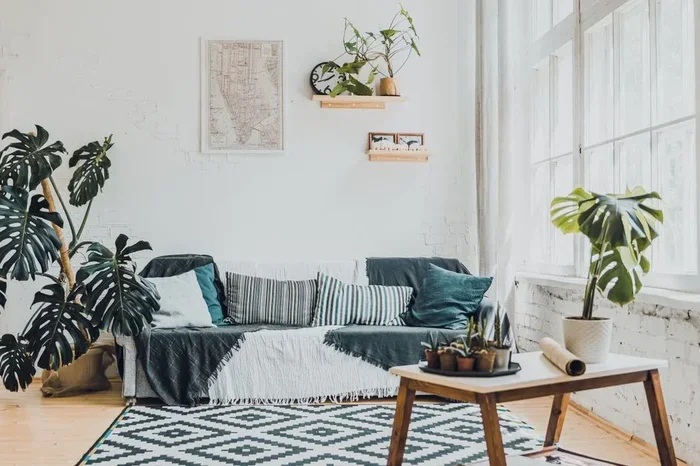
Plants are the heart of any biophilic living room. They bring life, color, and fresh air into your space. You can start small with a few easy-care houseplants or go big with a full living wall.
Some great options for beginners include:
- Snake plants: These thrive in low light and need very little water. Perfect for corners and shelves.
- Pothos: A trailing plant that looks beautiful in hanging baskets or on top of bookshelves.
- Peace lilies: They flower beautifully and help purify indoor air naturally.
- Rubber plants: Their large, glossy leaves add a bold, organic feel to any room.
- Ferns: These love humidity and add a lush, forest-like texture to your space.
If you want a dramatic effect, consider a living wall. These vertical gardens turn an entire wall into a green oasis. They do require a bit more maintenance, but the visual impact is stunning. A living wall is one of the most powerful biophilic elements you can add to a living room.
Natural Light and Airflow
Natural light is one of the most important components of biophilic interior design. It connects your indoor space with the rhythms of the outdoors. Sunlight shifts throughout the day, changing the mood and feel of your room.
To maximize natural light in your living room, try these tips:
- Use sheer curtains or blinds that let light pass through while softening harsh rays.
- Keep windows clean and unobstructed to allow maximum sunshine inside.
- Place mirrors strategically to reflect light into darker corners of the room.
- Choose lighter wall colors that bounce natural light around the space.
- Open windows regularly to allow fresh air and natural scents to circulate.
If your living room lacks windows, full-spectrum light bulbs can mimic natural sunlight. They are an easy swap that makes a big difference in how your biophilic design living room feels.
Organic Materials and Textures
One of the easiest ways to bring nature indoors is through the materials you choose. A biophilic living room features natural textures that you can touch and feel. These materials create warmth and visual interest without feeling forced.
Great organic materials for your living room include:
- Wood: Whether it is a reclaimed wood coffee table or oak flooring, wood adds an earthy, grounded feel.
- Stone: A stone accent wall or pebble coaster brings the rugged beauty of the outdoors inside.
- Wicker and rattan: These natural fibers work beautifully for furniture, baskets, and light fixtures.
- Linen and cotton: Natural fabrics for throw pillows and curtains add softness and breathability.
- Cork: A sustainable material that works well for flooring, wall tiles, or decorative boards.
Mixing different natural textures creates depth and richness in your space. A biophilic design living room should feel layered and tactile. You want to want to touch everything.
Water Features and Natural Sounds
Adding a water feature to your living room is a bold move, but it works beautifully. The sound of trickling water creates instant calm. It masks unwanted noise and adds a soothing sensory experience to your space.
You do not need a large fountain to get the benefits. A small tabletop water fountain, a bowl of water with floating flowers, or even a fish tank can introduce this element. The gentle sound and movement of water are powerful biophilic elements that transform the energy of a room.
Nature-Inspired Colors and Patterns
The colors you choose for your biophilic design living room set the foundation for the entire space. Earth tones and nature-inspired palettes help create a sense of harmony and balance. These colors remind us of the outdoors without being overwhelming.
Here are some color ideas to consider:
- Soft greens: Sage, olive, and moss green bring the feeling of a forest inside.
- Warm browns: Chocolate, taupe, and sand create a grounding, cozy base.
- Muted blues: Sky blue and slate blue evoke calm water and open skies.
- Warm whites: Cream and ivory add brightness without the sterility of pure white.
- Terracotta and clay: These warm, earthy tones connect your space to the ground beneath your feet.
For patterns, look to natural patterns like leaf prints, water ripples, or organic shapes. These subtle design choices reinforce the nature theme without feeling like a themed room. The goal is a nature-inspired living room that feels natural, not forced.
Practical Tips for Creating Your Biophilic Living Room
Now that you understand the key elements, let us talk about how to actually put them together. Creating a biophilic design living room does not happen overnight. It is a process of layering and experimenting until your space feels right.
Start With What You Have
Before you buy anything new, take a look at your current living room. What natural elements are already there? Maybe you have a nice view of trees outside your window. Perhaps you already own a wooden bookshelf or a jute rug. Start by building on what you have.
Next, identify what is missing. Do you need more plants? Better lighting? More natural textures? Make a short list of priorities. Tackle one area at a time so the process feels manageable and fun.
Create Zones That Connect to Nature
Think about your living room in zones. A reading nook by the window with a plant nearby becomes a mini nature retreat. A corner with a wooden floor lamp and a woven basket feels organic and intentional. Each zone should serve a purpose while reinforcing the biophilic design living room theme.
You can even create a dedicated plant corner. Group several plants together at different heights for a lush, garden-like feel. Add a small shelf with natural decor items like crystals, shells, or dried flowers. This kind of curated space tells a story about your connection to the natural world.
Choose Furniture That Feels Natural
When selecting furniture for your biophilic living room, look for pieces made from natural or sustainably sourced materials. A solid wood coffee table, a leather sofa, or a rattan accent chair all bring organic warmth to the space.
Avoid furniture that looks overly synthetic or plastic. The goal is for everything to feel grounded and real. If you are on a budget, look for second-hand wooden pieces or repurpose items you already own. A simple coat of natural wood stain can transform an old piece into something that fits your biophilic design perfectly.
Add Personal Touches
The best biophilic design living room spaces feel personal and unique. Add items that reflect your own relationship with nature. Maybe it is a collection of stones from your favorite hiking trail. A framed photograph of a beautiful landscape. A handmade ceramic vase with a single branch inside.
These personal touches make your space feel authentic. They tell visitors something about who you are and what you value. A truly biophilic home is one that reflects your own love for the natural world.
Common Mistakes to Avoid
While creating a biophilic design living room is exciting, there are some common pitfalls to watch out for. Avoiding these mistakes will save you time, money, and frustration.
- Overcrowding with plants: Too many plants can feel cluttered and overwhelming. Start with a few statement pieces and build from there.
- Ignoring maintenance: If you are not ready to care for living plants, opt for high-quality faux options or preserved botanicals.
- Using only one natural material: A room full of wood but nothing else can feel one-dimensional. Mix textures for a richer result.
- Forgetting about light: No amount of decor can replace good natural light. Prioritize window treatments that let sunshine in.
- Going too themed: A biophilic living room should feel balanced, not like a jungle or a cabin. Aim for harmony, not overload.
The biggest mistake people make is trying to do everything at once. Take your time. Let your biophilic design living room evolve naturally, just like nature itself does.
Expert Insights on Biophilic Living Room Design
Interior designers who specialize in biophilic architecture emphasize one key principle: authenticity. The goal is not to copy nature, but to honor it. Every element in your biophilic design living room should feel like a genuine connection to the natural world.
Experts also stress the importance of balance. A nature-inspired living room should combine beauty with function. Your space needs to work for your daily life while still feeling connected to something larger than yourself. The best biophilic interior design blends seamlessly into your routine.
One designer I spoke with put it perfectly. She said, “A biophilic room should make you feel like you just stepped outside for a walk and came back refreshed.” That is the goal. Your living room should be a place that restores you.
Quick Tips for Success
- Place a large statement plant near your main seating area for an instant focal point.
- Use a diffuser with natural essential oils like cedarwood or eucalyptus to engage your sense of smell.
- Add a small water fountain near your entryway to create a welcoming, calming first impression.
- Choose furniture with rounded edges and organic shapes for a softer, more natural feel.
- Rotate your plants seasonally to keep your biophilic living room feeling fresh and dynamic.
Conclusion
A biophilic design living room is more than a trend. It is a way of living that honors our deep connection to the natural world. By bringing plants, natural light, organic materials, and earth tones into your space, you create a home that supports your health, your mood, and your creativity.
You do not need a big budget or a professional designer. Start small. Add a few plants. Open your curtains. Choose a wooden side table over a plastic one. Each choice adds up to a space that feels alive, warm, and deeply satisfying.
The beauty of biophilic interior design is that it grows with you. As your awareness of nature deepens, your living room can evolve too. It becomes a personal sanctuary, a place where you can always find peace and renewal. So go ahead. Bring nature indoors. Your biophilic design living room is waiting to come to life.
Frequently Asked Questions
What is biophilic design in a living room?
Biophilic design living room spaces incorporate natural elements like plants, wood, stone, and natural light to create a stronger connection with the outdoors. The goal is to bring the calming, restorative qualities of nature into your everyday indoor environment.
How do I start a biophilic living room on a budget?
Start with affordable indoor plants from a local nursery or garden center. Swap synthetic throw pillows for linen or cotton covers. Add a wooden tray or a woven basket. These small, budget-friendly changes can quickly transform your space into a nature-inspired living room.
What are the best plants for a biophilic design living room?
Easy-care plants like snake plants, pothos, peace lilies, and rubber plants work wonderfully. They thrive in various light conditions and require minimal maintenance. For a bold statement, try a large fiddle leaf fig or a vertical living wall.
Can I use artificial plants in a biophilic living room?
Yes, high-quality artificial plants can work if you are not ready for live plants. However, real plants offer additional benefits like air purification and the natural movement that comes with growth. A mix of both can also be effective in a biophilic design living room.
What colors work best for a biophilic design living room?
Earth tones like soft greens, warm browns, sandy beiges, and muted blues work best. These colors mirror the natural world and create a calming, grounded atmosphere. Avoid harsh whites and bright neons that feel disconnected from nature.
Does biophilic design really improve well-being?
Yes, research in biophilic architecture consistently shows that connecting with natural elements reduces stress, improves mood, and boosts focus. A well-designed biophilic living room can genuinely enhance your daily quality of life and mental health.