How to Organize Your Living Room and Transform the Space
Discover how to organize living room spaces with easy, actionable steps that work for any home. This guide covers decluttering, smart storage, furniture arrangement, and maintenance habits that keep your living room tidy and inviting. Whether you have a small apartment or a large family room, these tips will help you create a calm, organized space you will love spending time in.
Your living room is the heart of your home. It is where you relax, entertain guests, and spend quality time with family. But when that space feels chaotic and cluttered, it can drain your energy and make your home feel unwelcoming. If you have been searching for a way to bring order back to your main gathering space, you are in the right place.
This guide will walk you through everything you need to know about how to organize living room areas effectively. We will cover decluttering strategies, storage solutions, furniture arrangement tips, and easy habits that keep your space tidy long after the initial effort. The goal is simple. Give you a calm, functional, and beautiful living room that reflects who you are.
You do not need a huge budget or a design degree to make this happen. With the right approach and a little effort, you can completely transform the way your living room looks and feels. Let us dive in.
Key Takeaways
- Start with decluttering: A clean slate makes organizing your living room much easier and faster.
- Use vertical storage: Shelves, wall-mounted units, and tall cabinets maximize space without cluttering the floor.
- Arrange furniture with purpose: A thoughtful layout improves flow, function, and the overall feel of the room.
- Hidden storage is your best friend: Ottomans, baskets, and closed cabinets keep items out of sight.
- Maintain with simple habits: A quick daily routine prevents mess from building up again.
- Personalize your space: Organization should support your lifestyle, not restrict it.
📑 Table of Contents
- Why Organizing Your Living Room Matters
- How to Declutter Your Living Room
- Best Living Room Storage Solutions
- Furniture Arrangement Tips for a Tidy Living Room
- Living Room Organization Hacks That Actually Work
- How to Maintain an Organized Living Room
- Common Mistakes to Avoid When Organizing
- Expert Insights on Living Room Organization
- Final Thoughts on Transforming Your Living Room
Why Organizing Your Living Room Matters
The living room is often the first room guests see when they walk into your home. It sets the tone for the entire house. A cluttered living room can make even the most beautiful home feel stressful. On the other hand, a well-organized space brings a sense of peace and control into your daily life.
Beyond aesthetics, an organized living room has real benefits for your mental health. Studies show that clutter increases cortisol levels, which is the stress hormone. When your space is tidy, your mind feels clearer. You sleep better. You think more clearly. You simply feel better at home.
Organizing also saves you time. When everything has a place, you spend less time searching for things. You spend less time cleaning around piles of stuff. And you spend more time actually enjoying your living space. That alone is worth the effort.
The Connection Between Space and Mood
Think about how you feel when you walk into a messy room versus a clean one. The difference is immediate. A tidy living room gives you a sense of accomplishment and calm. It creates room for creativity, relaxation, and connection with the people you love.
When you invest time in living room organization, you are investing in your well-being. It is not just about looking good for visitors. It is about creating a space where you genuinely want to be.
How to Declutter Your Living Room
Before you buy any storage bins or rearrange furniture, you need to declutter. This is the most important step in the entire process. You cannot organize a space that is overflowing with things you do not need or use.
Start with a Living Room Declutter Plan
Do not try to tackle everything at once. That leads to burnout and frustration. Instead, break the job into smaller sections. Here is a simple plan to follow:
- Day 1: Clear all flat surfaces. This includes coffee tables, side tables, TV stands, and shelves.
- Day 2: Sort through your entertainment area. Remove items that do not belong in the living room.
- Day 3: Tackle the seating area. Remove throw blankets, magazines, and items from couches and chairs.
- Day 4: Address storage areas. Go through cabinets, closets, and drawers one at a time.
This approach keeps the task manageable. You can spread it over a weekend or take one section per day. The key is to start and stay consistent.
Sort and Categorize Everything
As you go through items, create four piles. Keep, donate, sell, and trash. Be honest with yourself about what you actually use. If you have not touched something in over a year, it is probably time to let it go.
For items you want to keep, sort them by category. Group books together, electronics together, and decorative items together. This makes it much easier to assign homes for everything later. A good rule of thumb for living room declutter is to touch each item only once. Decide immediately where it belongs.
Best Living Room Storage Solutions
Once you have decluttered, it is time to find the right storage solutions. The goal is to maximize space while keeping things accessible and visually appealing.
Use Vertical Space with Shelves
One of the easiest ways to gain more storage is to look up. Wall-mounted shelves take advantage of vertical space that most people ignore. They keep items off the floor and create a sense of height in the room.
Floating shelves are especially popular for living room design ideas because they are simple and versatile. You can use them for books, plants, framed photos, or baskets. Just remember to keep the arrangement balanced. Too many items on shelves can create visual clutter, which defeats the purpose.
Hidden Storage Ideas That Work
The best storage is the kind you do not see. Hidden storage keeps items out of sight while keeping them within reach. Here are some excellent options:
- Storage ottomans: These double as seating and hidden compartments for blankets, magazines, or remotes.
- Lift-top coffee tables: The top lifts to reveal a storage compartment underneath, perfect for everyday items.
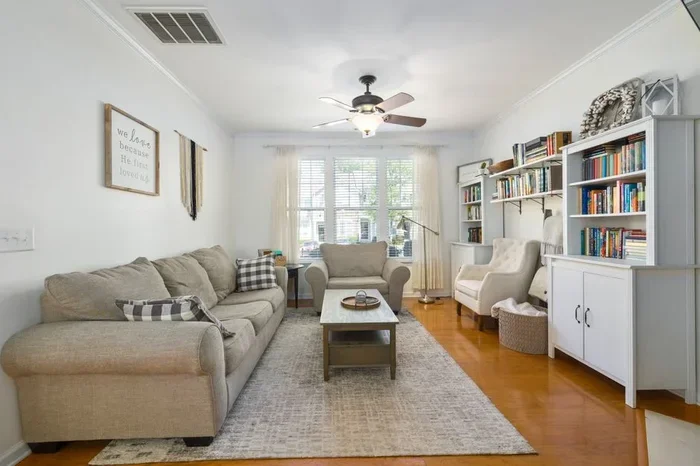
- Baskets and bins: Place them on shelves or under tables to corral smaller items neatly.
- TV stand with closed cabinets: Keeps electronics, cords, and accessories hidden from view.
- Under-sofa storage: Use shallow bins that slide under the couch for extra blanket or pillow storage.
These living room storage solutions help you keep the floor clear and the space feeling open. They are especially useful if you are learning how to organize a small living room where every square inch counts.
Furniture Arrangement Tips for a Tidy Living Room
How you place your furniture has a huge impact on how organized the room feels. A thoughtful arrangement improves flow, makes the space feel larger, and reduces clutter.
Create a Focal Point
Every living room needs a focal point. This is usually the television, a fireplace, or a large window. Arrange your main seating around this focal point. When furniture has a clear purpose and position, the room looks intentional rather than chaotic.
Avoid pushing all furniture against the walls. This actually makes the room feel smaller and less inviting. Pulling furniture slightly away from the walls creates a more conversational layout and gives the room a more spacious feel.
Leave Enough Walkway Space
Make sure there is a clear path between furniture pieces. A walkway of at least 30 inches allows easy movement through the room. When pathways are blocked, the space feels cramped and cluttered, even if it is not.
Think about how you move through the room daily. Place furniture to support that natural flow. If you have to squeeze past the coffee table to get to the sofa, that is a sign the arrangement needs adjusting.
Choose Furniture That Fits the Room
Oversized furniture in a small room is one of the biggest mistakes people make. Measure your space before buying new pieces. A living room makeover does not always mean replacing furniture. Sometimes it simply means choosing pieces that fit better and work smarter.
For smaller spaces, consider a two-seater sofa instead of a three-seater. Use a slim console table instead of a bulky entertainment center. Every piece of furniture should earn its place in the room.
Living Room Organization Hacks That Actually Work
Now that your space is decluttered and furniture is in place, let us look at some practical hacks that take your organization to the next level.
The One-In-One-Out Rule
This simple rule changes everything. For every new item that enters your living room, one item must leave. This prevents clutter from creeping back in. It works for books, decorative items, throw pillows, and even electronics.
It might feel strict at first, but after a few weeks, it becomes second nature. Your space stays balanced, and you become more intentional about what you bring into your home.
Use Baskets and Bins as Stylish Organizers
Baskets are one of the most underrated tools for home organization tips. They come in all shapes and sizes, and they instantly make storage look intentional rather than messy. Use woven baskets on shelves, under side tables, or at the foot of the couch.
Labeling bins is another simple trick that makes a big difference. When every bin has a label, everyone in the household knows where things go. This is especially helpful in families with children.
Create a Charging Station
Loose cables and charging devices are one of the biggest sources of living room clutter. Set up a dedicated charging station using a power strip tucked inside a basket or a charging dock on a side table. This keeps all devices in one place and cords out of sight.
It is a small change, but it makes a huge visual difference in the room. A tidy living room starts with eliminating the small, everyday messes that add up over time.
How to Maintain an Organized Living Room
Organizing is not a one-time event. It is an ongoing process. Without simple maintenance habits, your space will slowly slip back into chaos.
Build a Daily 10-Minute Routine
Set aside just ten minutes each day to tidy up. Put items back in their places. Fluff throw pillows. Clear the coffee table. This small habit prevents clutter from building up and makes deep cleaning much easier.
Many people find that doing this right before bed works best. The living room is reset for the next day, and you wake up to a calm, organized space.
Create a Living Room Cleaning Schedule
A weekly schedule keeps things on track. Here is a simple example:
- Monday: Vacuum the floors and dust surfaces.
- Wednesday: Declutter flat surfaces and put items away.
- Friday: Wash throw blankets and fluff cushions.
- Sunday: Do a full reset. Go through any items that migrated to other rooms.
You do not need to follow this exactly. The point is to have a rhythm. When cleaning becomes a habit rather than a chore, maintaining an organized living room becomes effortless.
Involve the Whole Household
Organization should not fall on one person. Assign simple tasks to everyone in the household. Kids can put away their toys. Partners can handle recycling. When everyone shares the responsibility, the space stays tidy much longer.
Make it fun. Set a timer and race to put things away. Play music while you tidy. When organizing feels like a team effort, it stops feeling like a burden.
Common Mistakes to Avoid When Organizing
Even with the best intentions, people often make mistakes that sabotage their efforts. Here are a few to watch out for.
- Buying storage before decluttering: You might buy organizers for stuff you do not even need anymore. Declutter first, then buy storage.
- Overcrowding shelves and surfaces: Less is more. Leave some breathing room on shelves and tables. A sparse look feels more organized than a packed one.
- Ignoring the entryway: Items often pile up near the living room entrance. Add a small tray or basket there to catch keys, mail, and bags.
- Forgetting to label: Without labels, storage bins become just another place for things to pile up. Labels create accountability.
- Trying to be perfect: An organized living room does not need to look like a magazine spread. It just needs to work for you and your family.
Avoiding these mistakes saves you time, money, and frustration. Keep things simple and practical. That is the real secret to lasting organization.
Expert Insights on Living Room Organization
Professional organizers often share the same core philosophy. Organization is not about perfection. It is about creating systems that work for your real life. Here are a few insights from the experts that can elevate your approach.
One organizer I respect once said, “Everything should have a home, and every home should be easy to access.” This idea is at the heart of effective home organization tips. If your remote control is buried in a drawer, you will stop putting it away. If your keys have a simple hook by the door, everyone will use it.
Another expert tip is to think about zones. Divide your living room into functional zones. A reading zone with a lamp and a small side table. A media zone for the TV and devices. A gathering zone with comfortable seating. When each zone has its own purpose, it is much easier to keep things in order.
These insights remind us that organizing a living room is not about following strict rules. It is about designing a space that supports how you actually live. When your systems align with your habits, staying organized becomes natural.
Final Thoughts on Transforming Your Living Room
Learning how to organize living room spaces is one of the most rewarding home improvements you can make. It does not require a massive budget or hours of free time. It requires intention, a simple plan, and consistent habits.
Start by decluttering. Then add smart storage solutions. Arrange your furniture with purpose. Use practical hacks to keep things tidy. And most importantly, build maintenance routines that fit your lifestyle.
Your living room is more than just a room. It is the space where your life unfolds. Make it a place that supports you, inspires you, and brings you joy every single day. You deserve a home that feels calm, welcoming, and organized. And now you have everything you need to make it happen.
Take it one step at a time. Celebrate small wins along the way. And remember, a well-organized living room is not a destination. It is a way of living that you build over time.
Frequently Asked Questions
How do I organize a small living room?
Start by decluttering aggressively. In a small space, every item needs to earn its place. Use vertical storage like wall-mounted shelves and floating cabinets. Choose multi-functional furniture such as storage ottomans or lift-top coffee tables. Keep surfaces clear and use baskets to hide items neatly. These steps make even the smallest living room feel spacious and organized.
What is the best way to declutter a living room?
The best approach is to sort items into four categories: keep, donate, sell, and trash. Work through one area at a time rather than trying to do everything at once. Apply the one-in-one-out rule to prevent clutter from returning. Be honest about what you actually use and what just takes up space. This method makes decluttering feel manageable and effective.
How often should I reorganize my living room?
A full reorganization every few months works well for most households. However, daily and weekly maintenance habits are what truly keep a living room organized. Spend ten minutes each day tidying up. Follow a weekly cleaning schedule. Small, consistent efforts prevent the need for major reorganization sessions and keep your space feeling fresh year-round.
What furniture is best for living room organization?
Furniture with built-in storage is ideal. Look for coffee tables with compartments, ottomans with hollow interiors, and TV stands with closed cabinets. Choose pieces that fit the scale of your room. Avoid oversized furniture that dominates the space. The right furniture makes organization easier and keeps the room looking balanced and intentional.
How can I make my living room look organized without spending much money?
Start with what you already have. Clear surfaces, group similar items together, and use baskets or bins you already own. Repurpose old boxes with nice wrapping or fabric covers. Rearrange furniture to improve flow. Often, a simple rearrangement costs nothing but makes a dramatic difference in how organized the room looks and feels.
Why does my living room get cluttered so quickly?
Living rooms tend to accumulate items because they are high-traffic areas where people relax, eat snacks, and watch TV. Without designated homes for everyday items like remotes, chargers, and magazines, things naturally pile up. Building simple systems, like a charging station and a tray for small items, addresses this problem at the root and keeps clutter under control.
=== CONCLUSION ===
Organizing your living room is one of the best investments you can make in your home and your well-being. From decluttering to smart storage to daily maintenance habits, every step brings you closer to a space that feels calm, functional, and truly yours. The tips and strategies in this guide give you a clear roadmap to follow. You do not need to do everything at once. Just start with one section, build momentum, and let the process unfold naturally.
Remember, the goal of living room organization is not perfection. It is about creating a space that supports your lifestyle and brings you peace. Apply what you have learned here, adapt it to your unique needs, and enjoy the transformation. Your dream living room is closer than you think.