Living Room Media Cabinet Ideas That Transform Your Space
A living room media cabinet is one of the easiest ways to boost both style and function in your home. Whether you prefer a minimalist media cabinet or a rustic media console, the right piece can completely change your room. This guide covers styles, sizes, materials, and pro tips to help you choose the best media storage solution for your space.
Key Takeaways
- Right Style Matters: Choosing the correct living room media cabinet style sets the tone for your entire room.
- Size Is Everything: Measure your space first to avoid overcrowding or buying a piece that is too small.
- Storage Options Vary: Open shelving and closed storage each offer unique benefits for keeping your room tidy.
- Materials Affect Durability: Wood, metal, and engineered wood each bring different looks and lifespans.
- Cable Management Is Key: A good media cabinet keeps wires hidden and your space looking clean.
- Styling Makes a Difference: Adding plants, books, and decor items turns a plain TV console into a design focal point.
📑 Table of Contents
Why a Living Room Media Cabinet Matters
Your living room media cabinet does more than hold your TV. It anchors the room. It gives you a place to store remotes, game consoles, and DVDs. It also ties the whole look of your space together.
A well-chosen media unit can make a small room feel bigger. It can give a large room a sense of balance. Without one, your electronics just sit out in the open. Cables hang loose. Devices collect dust. The whole area feels messy.
A good entertainment center solves all of that. It hides the clutter. It adds storage. And it looks great while doing it. That is why picking the right living room furniture piece deserves real thought.
Think of your display cabinet as the backbone of your living room setup. Every other design choice flows from it. The color, the shape, the size, the material, all of it matters. Let us walk through everything you need to know.
Popular Living Room Media Cabinet Styles
Not all media cabinets look the same. In fact, the range of styles is huge. Some people want something sleek and modern. Others want a warm, cozy feel. Your style choice should match your personality and your room.
Modern Minimalist
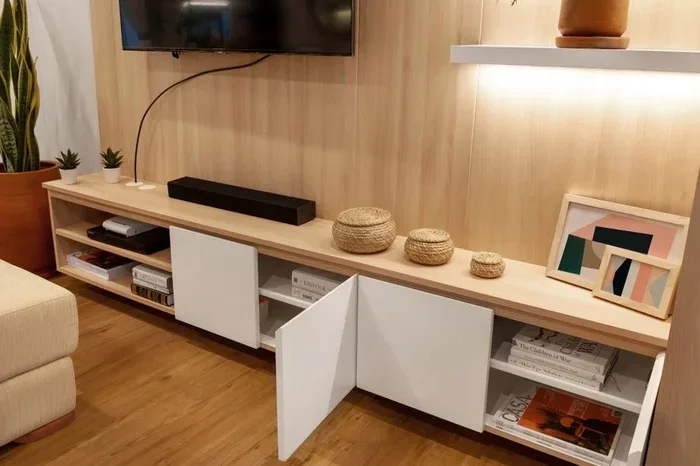
The minimalist cabinet is all about clean lines. It has no extra fuss. Flat panels, simple handles, and a low profile define this look. A modern TV stand in this style works best in rooms with a lot of white or neutral tones.
If you love open space and simplicity, this is the way to go. The focus stays on your screen and your living room decor. Nothing distracts from the clean look.
Rustic and Farmhouse
A rustic media console brings warmth and character. Think reclaimed wood, natural textures, and earthy colors. This style fits perfectly with a farmhouse style living room.
Rustic cabinets often feature visible wood grain and chunky hardware. They feel cozy and inviting. They also hide electronics well because the design draws the eye to the wood, not the gadgets.
Mid-Century Modern
The mid-century modern look never goes out of style. Tapered legs, warm wood tones, and retro shapes define this category. A mid-century media unit adds a timeless feel to any room.
This style works especially well in rooms with a mix of vintage and modern pieces. It adds a touch of elegance without feeling fussy or overdone.
Industrial
If you like raw materials, the industrial style is for you. Metal frames, exposed wood, and dark finishes create a bold look. An industrial media cabinet pairs well with brick walls and concrete floors.
This style is sturdy and durable. It also makes a strong design statement. Great for those who want their storage furniture to double as art.
| Style | Best For | Common Materials | Price Range |
|---|---|---|---|
| Modern Minimalist | Small rooms, clean aesthetics | Engineered wood, laminate | Mid-range |
| Rustic / Farmhouse | Cozy, warm spaces | Reclaimed wood, solid pine | Low to mid-range |
| Mid-Century Modern | Vintage-inspired rooms | Walnut, oak, teak | Mid to high-range |
| Industrial | Loft-style, bold rooms | Metal, distressed wood | Mid-range |
Choosing the Right Size and Fit
Size is one of the most important things to get right. A living room media cabinet that is too big will overwhelm your space. One that is too small will not hold everything you need.
Start by measuring the area where you plan to place the cabinet. Leave at least a few inches on each side for airflow. You also want to make sure the cabinet is not taller than your seating area. You should be able to see your TV comfortably from your couch.
Width Matters
A wide TV console gives you more surface area for decor. It also holds more devices. But a narrow wall-mounted cabinet can save floor space in a tight room. Think about what your room needs most.
Height Considerations
Tall cabinets offer more vertical storage. They are great for rooms with limited floor space. Shorter cabinets keep the room feeling open and airy. Both options work well, so pick based on your room layout.
Depth and Clearance
Do not forget about depth. A deep cabinet can store bigger items like gaming consoles and soundbars. A shallow one works fine for just a TV and a few remotes. Make sure the cabinet does not block any walkways or doors.
Smart Storage and Organization Ideas
Storage is the whole point of a media cabinet. But how you use that storage makes all the difference. A cluttered cabinet looks just as bad as no cabinet at all.
Closed vs. Open Storage
Closed storage keeps things hidden. It is perfect for hiding cables, game discs, and remotes. Doors and drawers give you a clean, uncluttered look.
Open shelving, on the other hand, lets you display items. Books, plants, and framed photos look great on open shelves. The trick is to keep the items curated. Too many things on open shelves can create visual noise.
Many of the best display cabinet designs mix both. They have closed sections below and open shelves above. This gives you the best of both worlds.
Cable Management Made Easy
Nothing ruins the look of a living room media cabinet like messy cables. But managing them is easier than you think.
Look for cabinets with built-in cable pass-through holes. These let you route wires behind the unit. You can also use cable ties or a cable management box to keep things tidy.
A wall-mounted cabinet is another great option for hiding wires. It lifts the unit off the floor and gives you space to run cables along the wall. Your living room will look cleaner and more put-together.
Materials and Finishes That Work Best
The material you choose affects both the look and the lifespan of your media storage piece. Here is a quick look at the most popular options.
Solid wood is the most durable choice. It ages beautifully and adds warmth to any room. Oak, walnut, and pine are common options. Solid wood cabinets cost more, but they last for decades.
Engineered wood is more affordable. It is made from wood chips, fibers, or veneers bonded together. It works well for a minimalist cabinet or a budget-friendly TV console. Just make sure it has a good finish to protect against moisture.
Metal and glass combos create a sleek, modern look. They are easy to clean and very durable. An accent cabinet in metal and glass adds a stylish touch to contemporary rooms.
Laminate and veneer options offer the look of real wood at a lower price. They come in many colors and patterns. These are great if you want a specific look without a big price tag.
Expert Tips for Styling and Decorating
Once you have your living room media cabinet in place, it is time to style it. A few simple tips can turn a basic unit into a room centerpiece.
Add plants. A small potted plant on top of your media unit adds life and color. Plants also help clean the air in your room. Choose low-maintenance options like pothos or snake plants.
Layer in books. Stack a few coffee table books on your shelves. They add height and texture. Pick books with covers that match your room color scheme.
Use lighting. LED strip lights behind your cabinet create a soft glow. They also help you see your devices in the dark. A small lamp on the cabinet adds warmth too.
Keep it balanced. Do not overload one side of the cabinet. Spread items evenly. Use the rule of three: group items in odd numbers for a more pleasing look.
Match your room theme. Your floating shelves and cabinet should complement the rest of your living room furniture. If your room has a mid-century modern vibe, pick a cabinet with tapered legs and warm wood tones.
Common Mistakes to Avoid
Even with the best intentions, people make mistakes when choosing a media cabinet. Here are a few to watch out for.
Skipping measurements. This is the number one mistake. Always measure your space before you shop. Bring a tape measure to the store if you can.
Ignoring ventilation. Electronics need airflow. A cabinet that is completely sealed can cause your devices to overheat. Look for designs with ventilation slots or open backs.
Choosing style over function. A beautiful cabinet means nothing if it does not fit your needs. Think about what you need to store. Make sure the media storage options match your lifestyle.
Overloading shelves. Too much weight on open shelves can cause them to sag. Distribute heavy items across multiple shelves. Use closed storage for heavier items whenever possible.
Forgetting about cable management. Exposed cables make even the best-looking entertainment center look messy. Plan your cable routing before you set up the cabinet.
Conclusion
A living room media cabinet is more than just a piece of furniture. It is the foundation of your room’s look and feel. It keeps your electronics organized. It hides the clutter. And it gives you a place to showcase the things you love.
Whether you choose a minimalist cabinet, a rustic media console, or something in between, the key is to pick a piece that fits your space and your style. Consider the size, the material, the storage options, and the overall design of your room.
Use the tips in this guide to make a confident choice. Style your cabinet with plants, books, and lighting to make it truly your own. With the right living room media cabinet, your space will feel organized, stylish, and welcoming every single day.
Frequently Asked Questions
What size living room media cabinet do I need?
Measure the area where the cabinet will go, including height, width, and depth. Leave space for airflow and easy access. A cabinet that is about 60 to 72 inches wide works well for most standard living rooms.
Can I mount a living room media cabinet on the wall?
Yes, wall-mounted cabinets are a great option for small rooms. They save floor space and create a clean, floating look. Make sure you anchor the cabinet securely into wall studs for safety.
What is the best material for a media cabinet?
Solid wood is the most durable and long-lasting option. Engineered wood and laminate are more affordable and still offer good quality. Choose based on your budget and the style of your room.
How do I hide cables in my media cabinet?
Look for cabinets with built-in cable pass-through holes. You can also use cable management boxes or ties to keep wires organized. A wall-mounted cabinet makes it even easier to route cables along the wall behind the unit.
What is the difference between a media cabinet and an entertainment center?
A media cabinet is typically smaller and more focused on storage. An entertainment center is usually larger and may include space for multiple devices, speakers, and more components. Both serve the same purpose of organizing your electronics.
How can I style my living room media cabinet?
Add a mix of closed storage and open shelves. Place plants, books, and small decor items on open areas. Use LED lighting behind the cabinet for a warm glow. Keep the design balanced and match the style to the rest of your room.